
American Standard AC Repair in Provo: A Homeowner’s Guide
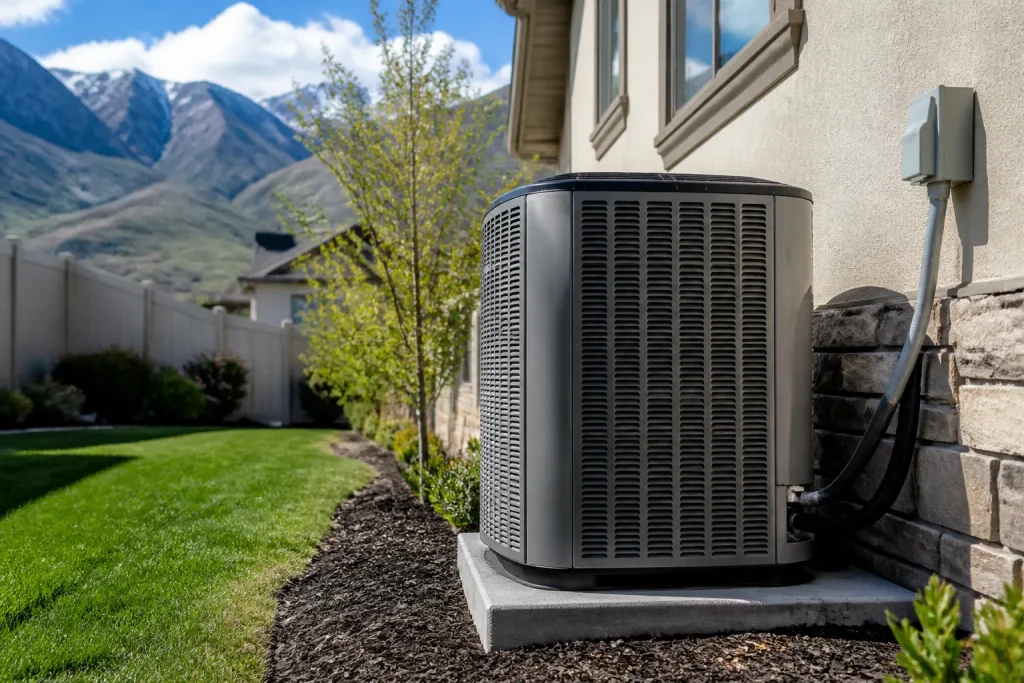
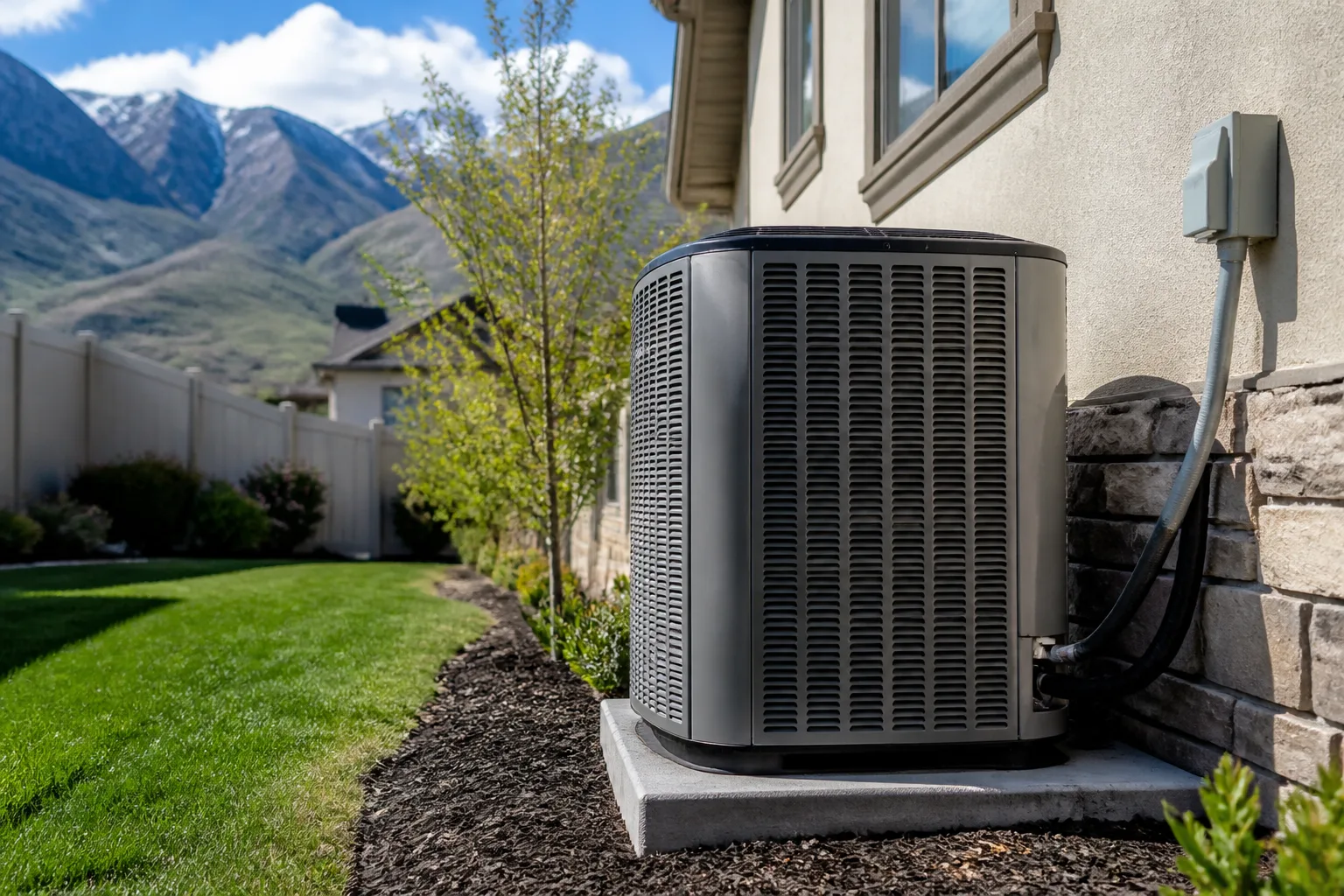
American Standard’s Spine Fin coil is one of the most efficient condenser coil designs in residential cooling. It’s also the reason airflow restrictions cause faster freeze-overs than you’d see on a standard round-tube plate-fin coil, and that single fact sits underneath a large share of the American Standard repair calls we run in Provo. If your system is icing up, short-cycling, or blowing warm, start by checking the filter and the outdoor unit’s clearance. If your rather not troubleshoot it yourself, call (855) 657-5471.
Why American Standard Systems Behave Differently in Provo
American Standard builds equipment to tight tolerances. That precision is exactly why the brand holds up for years, and exactly why repairs need to match factory specs instead of being eyeballed. A system designed to a narrow charging window doesn’t tolerate a “close enough” refrigerant top-off.
Then there’s Provo itself. We sit in a valley with alkaline, mineral-heavy water, long dry summers, and spring pollen that coats condenser coils within weeks. Dust from valley winds and nearby construction settles into fins and clogs the Spine Fin’s tightly spaced geometry faster than a looser coil design would. When that happens, head pressure climbs, the system works harder than it should, and the evaporator can freeze.
Homes here also run a wide daily temperature swing. A 95-degree afternoon followed by a 60-degree night means your system cycles more than a coastal system would. American Standard’s two-stage and variable-speed compressors handle that well, but only when the charge and airflow are set correctly.
What we watch for on a Provo American Standard call:
- Spine Fin coil packed with pollen and dust, driving high head pressure
- Freeze-over from restricted airflow, not always a refrigerant leak
- Control board fault codes that point to a sensor rather than the board itself
- Charging that’s off because a prior tech treated a two-stage unit like a single-stage
The Spine Fin Coil: Maintenance That Actually Matters Here
The Spine Fin coil is American Standard and Trane’s signature design. Instead of aluminum plate fins pressed onto copper tubes, it’s a continuous spine-wrapped coil with far more surface contact. That design transfers heat efficiently and resists corrosion well. It also traps debris in a way that plate-fin coils don’t.
In Provo, that means coil cleaning isn’t a once-a-season afterthought. A clogged Spine Fin coil does three things at the component level:
- Raises condensing pressure, which pushes the compressor harder and shortens its life.
- Reduces heat rejection, so the system runs longer to hit the thermostat setpoint.
- Contributes to evaporator freeze-up, because the indoor coil can’t absorb the heat load the outdoor coil is failing to reject.
Homeowners can rinse the outdoor coil with a garden hose on low pressure, coil-safe cleaner, and a soft brush – never a pressure washer, which bends the spine fins. Beyond that, an annual coil inspection before the Provo summer is the single best thing you can do for a Spine Fin system. If you’d rather not handle it, our AC repair team handles coil cleaning as part of a diagnostic visit.
American Standard Control Board Fault Codes: What They Really Mean
American Standard’s communicating and non-communicating control boards flash fault codes that tell you where to look, not always what’s broken. A code pointing at a pressure switch or temperature sensor often means the sensor is fine and the real problem is airflow, charge, or a loose connection. Reading the code as “replace this part” is how homeowners end up paying for a component that wasn’t the issue.
Common codes and what they usually indicate:
- Pressure switch fault: low refrigerant charge, a restricted filter, or a failing switch itself.
- Temperature sensor fault: a disconnected or out-of-range thermistor.
- Communication fault: a wiring issue between the thermostat, air handler, and condenser.
- Lockout after repeated retries: a symptom that needs the underlying cause found, not a board swap.
A technician who knows American Standard’s board logic will test the sensor reading and the wiring before condemning the board. That’s the difference between a brand-specific diagnosis and generic guesswork. Call (855) 657-5471 if you’re seeing a code you don’t recognize.
Two-Stage and Variable-Speed Charging: Why It’s Not a Single-Stage Job
American Standard’s two-stage and variable-speed compressors don’t charge like a single-stage unit. A technician who treats them the same way will undercharge or overcharge the system, and the homeowner pays for it in comfort and compressor wear.
Here’s what changes:
- Two-stage systems need to be charged on the correct stage, with subcooling or superheat measured against the manufacturer’s target for that stage, not a generic chart.
- Variable-speed systems require the compressor to be held at a specified operating condition, then charged to the manufacturer’s subcooling target.
- Both depend on correct airflow. A weak blower or a restrictive filter throws off the reading, so airflow gets verified first.
That’s why a “quick top-off” on an American Standard variable-speed system usually isn’t quick and usually isn’t right. Our AC installation and repair technicians charge to factory spec because that’s what the equipment was designed for.
Verifying Manufacturer-Spec Parts vs. Generic Replacements
This one matters for your warranty. American Standard’s warranty terms can be affected by non-OEM parts, and a generic capacitor or control board can cause a claim to be denied. When a technician quotes a repair, ask three things:
- What’s the exact part number, and is it an American Standard OEM part?
- Is the part covered under the remaining warranty if it’s the failure point?
- Will using this part preserve my existing coverage?
In our experience, homeowners rarely ask these questions until something fails again. A little scrutiny up front saves a lot of argument later. We stock and specify OEM parts for the brands we’re factory-trained on, which now includes Bryant, Trane, and Carrier alongside American Standard.
What American Standard Warranty Coverage Transfers When You Buy a Provo Home
If you bought a Provo home with American Standard equipment already installed, the manufacturer’s limited warranty usually transfers to you as the new owner, provided you can document the equipment and its service history. The transfer process typically requires the original installation date, the model and serial numbers, and sometimes registration paperwork with the manufacturer.
What doesn’t automatically follow the house:
- Extended labor warranties, unless the previous owner purchased a transferable one
- Any dealer-specific service agreements
- Parts coverage if the system was installed without a permit or by an unlicensed installer
Before closing on a Provo home, ask for the equipment model and serial numbers and a copy of the original install paperwork. If it’s missing, we can help identify the equipment and estimate what coverage likely remains. Our team has been the go-to brand-agnostic choice for Provo homeowners since 2013.
When to Call a Pro
You can safely check the filter, clear debris around the outdoor unit, and rinse the Spine Fin coil on low pressure. You should call a technician if you see ice on the refrigerant lines, hear the compressor short-cycling, smell anything burning near the air handler, or get a repeated fault code after a reset. Those point to charge, electrical, or component issues that need gauges and a meter, not guesswork. Fast dispatch runs 7am to 7pm, Sunday through Friday, and We answer 24/7 on the phone line.
Related services in Provo: we handle furnace repair as well as cooling, so the same team can keep your American Standard system comfortable through both Provo seasons.
The Bottom Line
American Standard equipment rewards owners who match its precision with precise service. Spine Fin coils need regular cleaning in Provo’s dusty, pollen-heavy air. Two-stage and variable-speed systems need factory-spec charging, not a generic top-off. Control codes need diagnosis at the component level. And OEM parts matter for keeping your warranty intact. If you want a technician who knows your American Standard system by name, call (855) 657-5471. Free estimates. Fast dispatch, 7am-7pm.
Frequently Asked Questions
Spine Fin coils clog more readily than round-tube plate-fin coils, so restricted airflow in Provo’s dusty air leads to freeze-over sooner. Check the filter and coil clearance first, then call (855) 657-5471 if it keeps happening.
Not usually. Most codes point to a sensor, wiring, airflow, or charge issue rather than the board itself. A trained technician tests the reading before replacing anything. Call (855) 657-5471 for a diagnostic.
You can, but they may affect the remaining manufacturer warranty. Ask for the OEM part number and confirm coverage before authorizing a repair. We stock OEM parts for American Standard and the other brands we service.
Usually yes, for the manufacturer’s limited parts warranty, if you have the install paperwork and model/serial numbers. Extended labor warranties may not transfer. Call (855) 657-5471 and we can help identify what’s likely covered.
Written by the team at AC Repair Provo, serving Provo since 2013.
Need HVAC Help?
Call AC Repair Provo - licensed & insured, here with fast help in Provo.
(855) 657-5471