
Last updated November 14, 2026
 AC repair
 Furnace & heating
 Heat pumps
 Ductless mini splits
 Carrier
 Trane
 Goodman
Seasonal tune-up and full diagnostic on your Carrier, Trane, or Goodman system - readings shown to you before any repair is proposed
Diagnosis first, numbers second - you approve the repair price before a single part goes in.
Get your free estimateHow to Hire an HVAC Contractor in Provo: A Step-by-Step Guide
A contractor can carry a state license, hold insurance, and show a wall of five-star reviews and still recommend a full system replacement when the actual problem was a failed capacitor. Reviews measure how pleasant a visit felt. They don’t measure whether the diagnosis was correct. That gap is where homeowners lose money, and it’s why the usual advice to check stars and collect three quotes doesn’t protect you. This guide hands you the technical questions that separate a technician who will find the right problem from one who guesses. You’ll learn how to verify a Utah license, what a load calculation proves, and how to read a quote. If you’re hiring in Provo, these questions matter more than any ad.
Quick Answer
To hire an HVAC contractor in Provo, verify their Utah DOPL license and EPA 608 certification, ask for a Manual J load calculation before any installation quote, confirm documented training on the brand already in your home, and insist on a written line-item estimate that follows an inspection of your existing equipment. A contractor who resists any of those four steps is telling you something. Call (855) 657-5471 if you’d rather skip the guesswork – estimates are free.
Styles & brands we work with
- AC repair
- Furnace & heating
- Heat pumps
- Ductless mini splits
- Carrier
- Trane
- Goodman
Table of Contents
- Step 1: Verify the Contractor’s Utah License
- Step 2: Ask for a Manual J Load Calculation
- Step 3: Confirm Brand-Specific Training
- Step 4: Verify EPA 608 Certification for Refrigerant Work
- Step 5: Read the Written Quote Line by Line
- Step 6: Know When Repair Beats Replacement
- Common Mistakes to Avoid
- Frequently Asked Questions
Step 1: Verify the Contractor’s Utah License
Utah regulates HVAC work through the Division of Occupational and Professional Licensing, usually shortened to DOPL. Before anyone touches your system, look them up. DOPL maintains a public license search, and it takes about two minutes to run a business name or an individual’s name through it. What you’re checking is simple: is the license active, and does the classification match the work being quoted?
This is where homeowners usually stop, and it’s where the useful questions begin. Utah issues an S370 license for residential solar and HVAC work. What an S370 license certifies is that the holder met the state’s requirements for that classification: the exam, the experience, the business and insurance filings. What it does not certify is diagnostic skill, brand familiarity, or that the person in your driveway tomorrow is the person whose name is on the license. A license is a floor, not a ceiling. It tells you the contractor is legally accountable to the state. It doesn’t tell you they’ll find the right problem.
So run the search, then ask two follow-ups. First: who will actually be dispatched, and is that technician employed by the company or subcontracted? Second: does the company carry general liability insurance and workers’ compensation, and can they send a certificate of insurance? Ask for it as a routine document, not an accusation. Licensed and insured contractors keep those certificates on hand because commercial clients ask for them constantly.
One Provo-specific note: the housing stock here spans a wide range, from older bungalows near downtown to newer builds out toward the east bench and the neighborhoods around Seven Peaks. Older homes often have equipment that was retrofitted one piece at a time, and a technician who understands how a mismatched system behaves is worth more than one who only knows new installs. Ask how they approach systems that were modified over time. The answer tells you whether they’ve worked on Provo homes or just read about them.
Step 2: Ask for a Manual J Load Calculation
If you’re getting a quote for a new system, this is the single most important question in the entire process. Manual J is the industry-standard method for calculating how much heating and cooling a specific house actually needs. It accounts for square footage, window area and orientation, insulation, air leakage, ceiling height, and local design temperatures. It’s a real calculation. It produces a real number. And any contractor who quotes a system size without running one is guessing.
Here’s the test. Ask, plainly: are you going to run a Manual J before recommending a size? You want to hear yes, and you want to hear that they’ll do it for your specific house. If the answer is “we’ll match what’s there now” or “we’ve done a lot of homes in this neighborhood,” that’s a shortcut. Matching existing equipment sounds responsible, but the existing equipment might itself have been oversized or undersized years ago. In our experience, oversizing is one of the most common problems we find, and it causes real symptoms: short cycling, uneven cooling, poor humidity control, and a system that wears out early.
Utah’s climate makes sizing especially unforgiving. Provo summers push equipment hard, and the difference between a properly sized unit and an oversized one shows up on the hottest afternoons in July and August, not on a mild day in May. A load calculation is also where the contractor should notice whether your ductwork can handle the airflow a new system would deliver.
Do the same check before AC installation. A written load calculation, a fixed price, and a scheduled install date are the three things a professional install quote gives you. The written estimate sets the final price. Load-calculated work gets planned, not rushed.
Step 3: Confirm Brand-Specific Training
“We work on everything” is the most common answer to the brand question, and it’s the least useful one. Every contractor says it. What you need to know is narrower: has this technician had documented training on the manufacturer already sitting in your home? A Carrier system and a Goodman system share principles but differ in controls, diagnostics, error codes, and parts. Brand-specific diagnosis saves diagnostic time and catches failures that generic troubleshooting misses.
Ask it directly. “My system is a Trane. Has your technician had manufacturer training on Trane equipment?” You’re looking for a specific, confident answer, not a rehearsed one. A company that’s genuinely fluent will tell you which brands it works on and can speak to the differences. A company that treats every system as a generic box will hedge.
At AC Repair Provo, we work on your brand. Our technicians carry factory-trained fluency across nine major manufacturers, including Carrier, Trane, Lennox, and Goodman, so diagnosis is brand-specific rather than guesswork. That coverage is also why we don’t push you toward one manufacturer. Recommendations are based on your existing equipment and budget, not on which brand a vendor relationship favors.
The reason this matters for repair, not just replacement, is diagnostic economics. An HVAC system gives up its faults in specific ways. A technician who knows the brand’s typical failure patterns and understands the control board logic looks in the right place first. A technician without that training starts from zero, and you can end up paying diagnostic time for basic research. So ask the question, and expect specifics.
Step 4: Verify EPA 608 Certification for Refrigerant Work
Anyone who handles refrigerants in the United States is required to hold EPA Section 608 certification. It’s a federal requirement, and it applies to the technician, not the company. This is a legal gate, not a nice-to-have, and most homeowners never think to confirm it. The certification comes in types that correspond to the kind of equipment being serviced, and it exists for good reasons: refrigerants are handled under pressure and carry both safety and environmental consequences when they’re mishandled.
Ask the question out loud: “Is the technician coming out EPA 608 certified?” It’s a completely normal question and a professional won’t be offended. If a company hesitates on this one, that’s meaningful. You can also ask whether refrigerant is recovered and recycled rather than vented, since venting is illegal and a certified technician will treat the question as obvious.
This step has a practical edge in cooling repair. When a system is low on refrigerant, the refrigerant itself isn’t the whole story. Charge doesn’t vanish. It leaks out, and the leak needs to be found, not just topped off every spring. A certified technician working through an AC repair call is looking for where refrigerant escaped, whether that’s a joint, a Schrader valve, or a coil. Topping it off without finding the leak is a recurring bill, not a repair.
Step 5: Read the Written Quote Line by Line
A quote is where a good diagnosis becomes a fair price, or where a vague one becomes an expensive lesson. A professional estimate lists specific parts, specific labor, and the specific diagnosis that justifies each line. Vague line items like “system tune-up” or “various repairs” tell you nothing, and you can’t verify them later.
Read the quote against this checklist:
- Is there a diagnosis before a recommendation? The quote should reflect an inspection of the existing equipment. A recommendation for replacement before anyone has looked at the current system is a sales pitch, not a diagnosis.
- Are the line items specific? Part names, part numbers where relevant, labor broken out, quantities stated. “Miscellaneous” should not appear.
- Is there any pressure tied to same-day pricing? Urgency is sometimes real. A fabricated deadline to force a signature is not. If a quote expires “today only,” you’re being sold to, not served.
- Are the assumptions written down? If the contractor is assuming ductwork is adequate, the quote should say so.
- Is the final price in writing? Verbal price discussions are useless six months later. The written estimate sets the final price.
Watch for one subtle red flag: a quote that recommends replacement without mentioning repair as an option. Both options belong in front of a homeowner with the reasoning for each. Repair-first is honest. Replacement when it’s actually warranted is also honest, but you’re entitled to see the case for both.
Free estimates make this easier to do properly. You can collect multiple written quotes without paying for each inspection. AC Repair Provo offers free estimates in Provo, and our estimate is written and fixed.
Step 6: Know When Repair Beats Replacement
You can’t audit a contractor’s recommendation unless you have a rough framework of your own. Repair is usually the right call when the problem is a discrete failed component: a capacitor, a contactor, a blower motor, a thermostat, a control board, a blocked drain line. These are single points of failure and the fix is usually straightforward.
Replacement starts to make sense when several things are true at once: the system is aging, major components are failing repeatedly, and repair costs are climbing relative to the value of a new system. Refrigerant type matters too. Older equipment using discontinued refrigerants can be expensive to repair because the refrigerant itself is scarce and costly. Ask what refrigerant your system uses and whether replacement parts are readily available. Those two answers do more to clarify the decision than any single number.
What you should never hear is a repair-or-replace recommendation delivered without the diagnostic evidence behind it. Ask for it. “What did you find, and what makes you think it’s the compressor and not the wiring at the compressor?” A confident technician will explain. A weak one will pivot back to the sales script.
In our experience covering both extremes of Provo weather, we always talk through the repair option before proposing replacement. It’s the same-system fix over the sales pitch. If your existing equipment is still sound, the honest answer is usually to keep it running.
What Does an HVAC Contractor Cost in Provo?
Pricing for HVAC work varies by job, and a reputable contractor will set the price per job with a written estimate. Repair calls are priced according to the diagnosis and the parts involved. Installation calls are priced after a load calculation and a site evaluation. What matters for you as a buyer is that the price is written, itemized, and fixed before work starts. Ask for it in writing and hold the contractor to it.
Also confirm the estimate is free. A contractor charging for an estimate that doesn’t turn into a repair is a legitimate business model, but you should know which sort of company you’re talking to before you book.
What Happens When You Call
Knowing what a call to a good contractor actually looks like is a useful filter all by itself. Here’s the shape of it. The phone is answered by a person who takes the symptoms and asks follow-up questions. A technician is dispatched with fast dispatch from 7am to 7pm. On arrival, the technician inspects the existing equipment before recommending anything, gives you a diagnosis you can repeat back, and hands you a written estimate covering the fix. You approve it, it gets done, and you get a report of what was actually found.
We answer 24/7. A call outside dispatch hours is booked into the next opening, Sunday through Friday, 7am to 7pm. There’s no fee for getting a price, and the same price applies whether or not the problem showed up at a bad moment. Cooling failures in Provo summers are genuinely urgent for families with young children or older residents, so we treat no-cool calls with priority.
How Should You Prepare Before the Technician Arrives?
Preparation shortens the diagnostic window and gets you a better answer for the same visit. Before the technician arrives, clear access to the indoor and outdoor units, note when the problem started, and write down any recent changes to the system or the house. Small details that feel unrelated to comfort problems often turn out to be the cause.
- Write down the symptoms in order. Did the thermostat go blank first, or did you notice the air warming gradually? Did anything trip a breaker? Sequencing narrows the diagnosis.
- Note the thermostat setting and the current indoor temperature. A system that’s holding the setpoint but running constantly is a different problem from one that never reaches the setpoint.
- Check the filter. Bring the current filter out to the technician if it’s been in for a while. A clogged filter causes symptoms that look like several other failures.
- Find your system’s data plate. Model and serial number. That plate tells the technician exactly which equipment is in the house, and having it in hand eliminates half of the diagnostic guesswork.
- Note any recent changes. New furniture, closed registers, a new thermostat, an energy efficiency upgrade to the house. All of these affect the system.
Don’t try to fix anything that involves gas lines, electrical panel work, or pressurized refrigerant. Those are genuinely dangerous and belong to a trained professional. Clearing filter housing and access panels is fine. Anything beyond that needs a technician.
See the difference
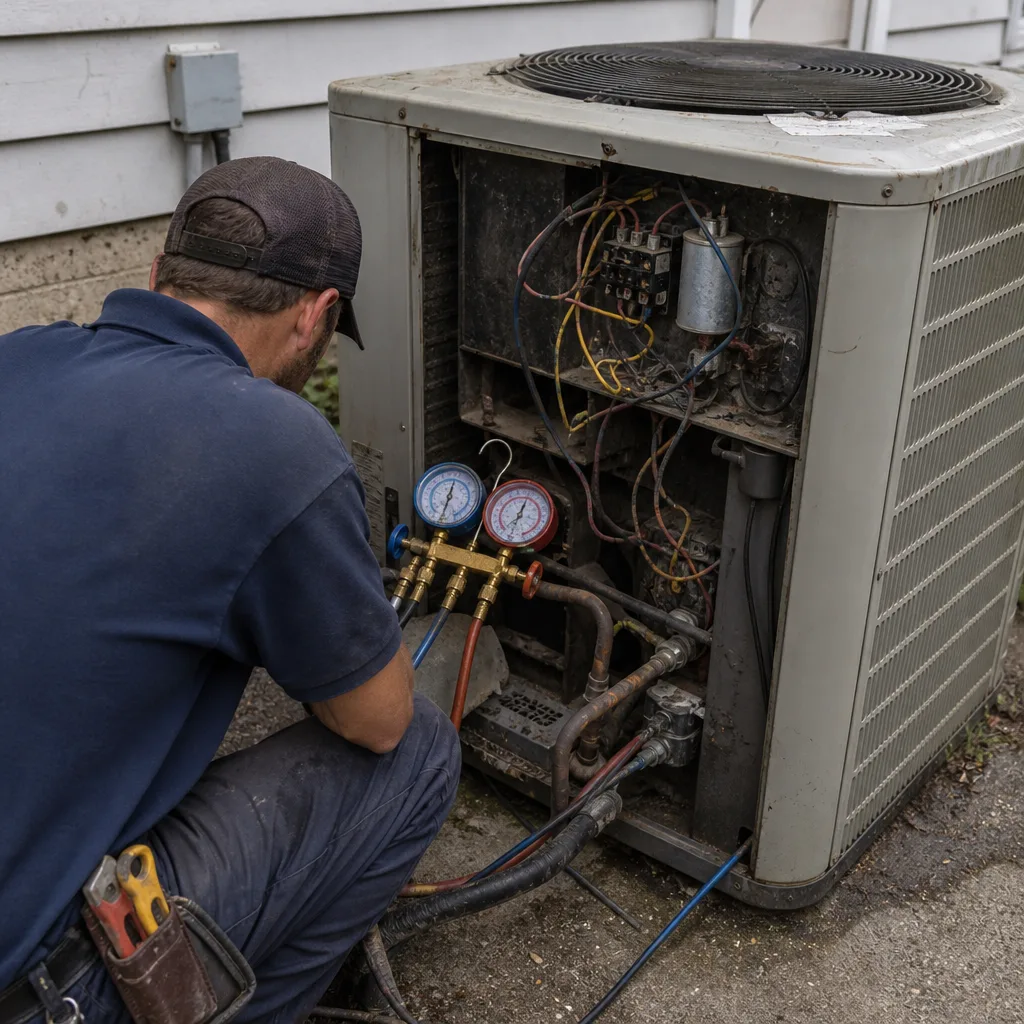 Before
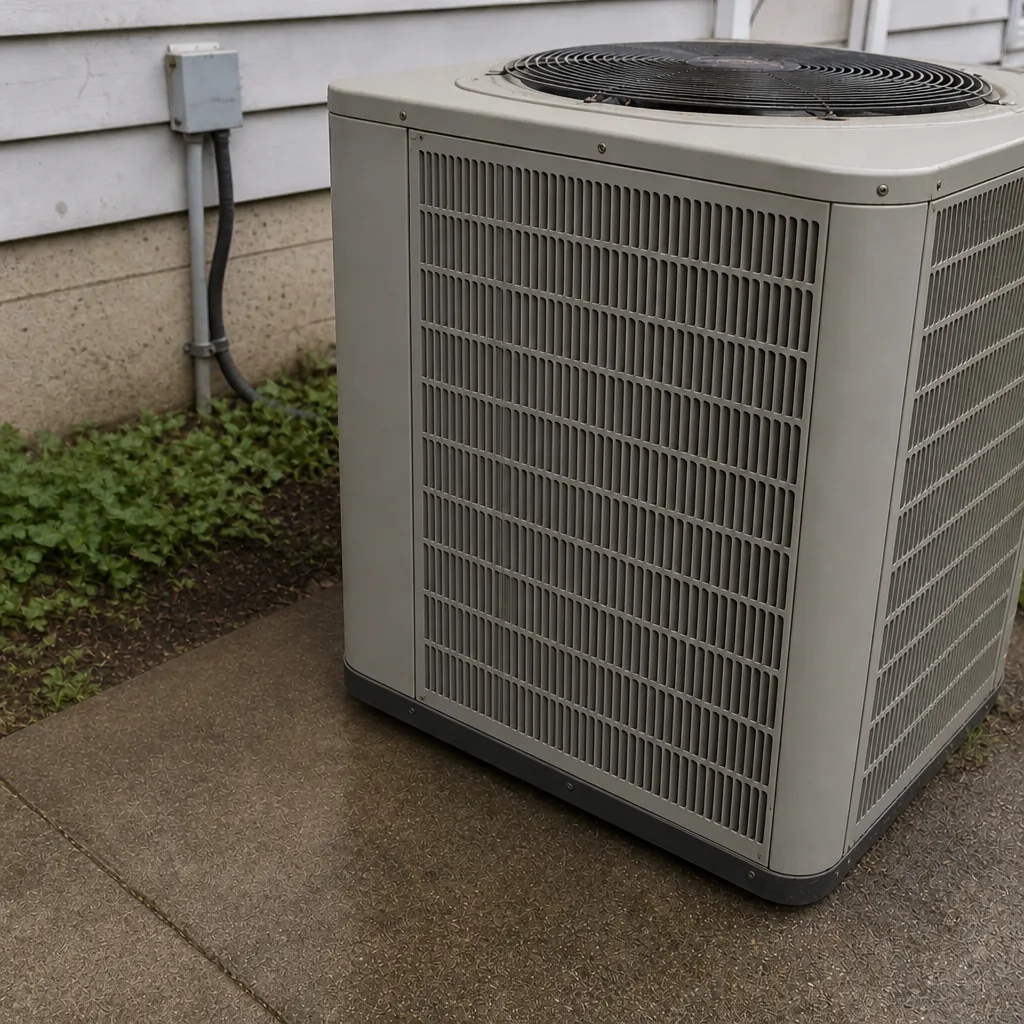 After
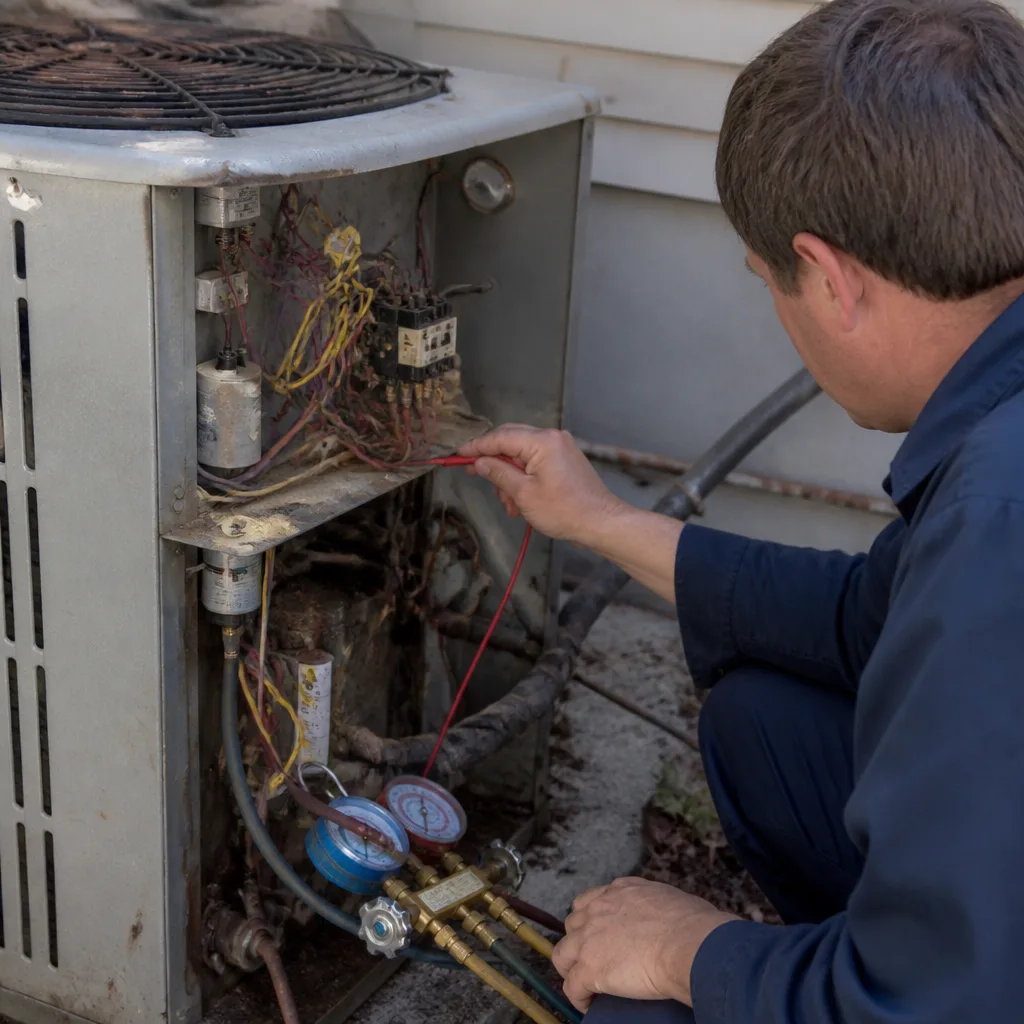 Before
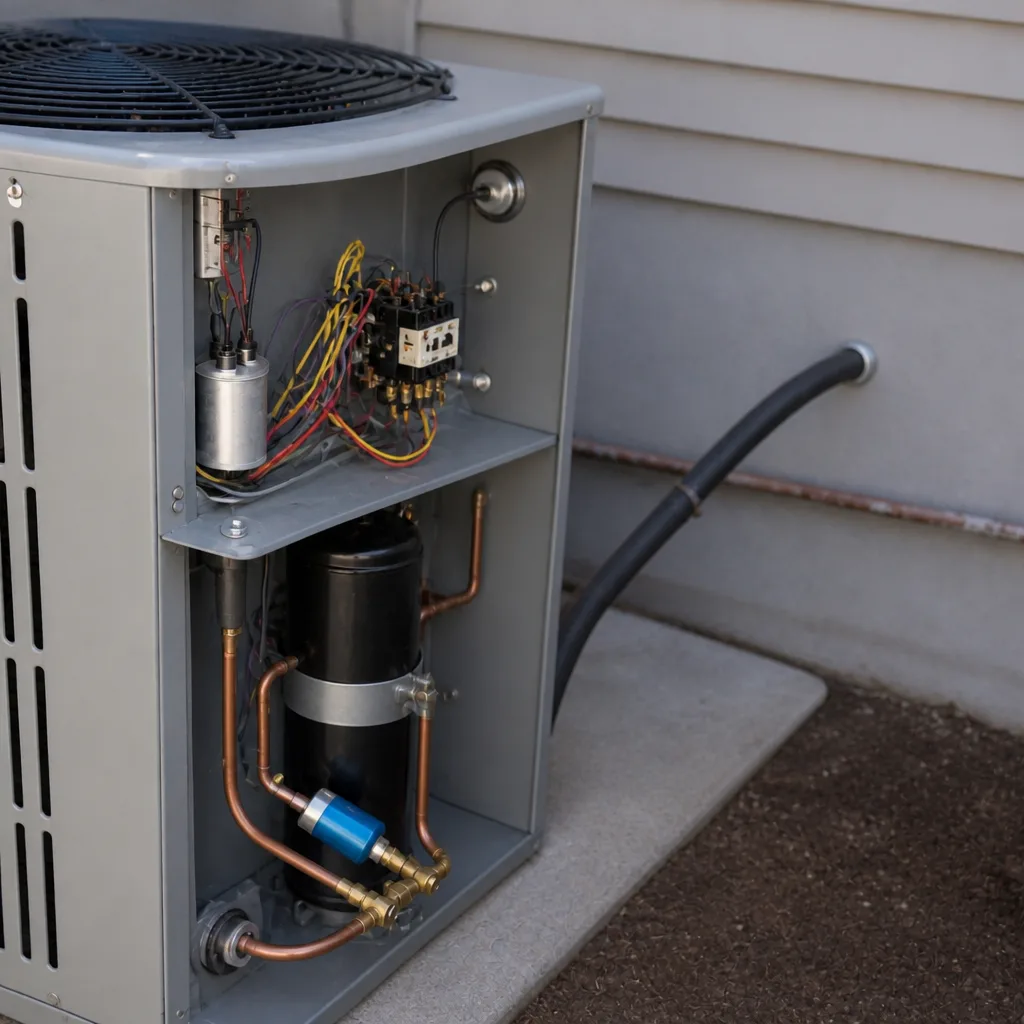 After
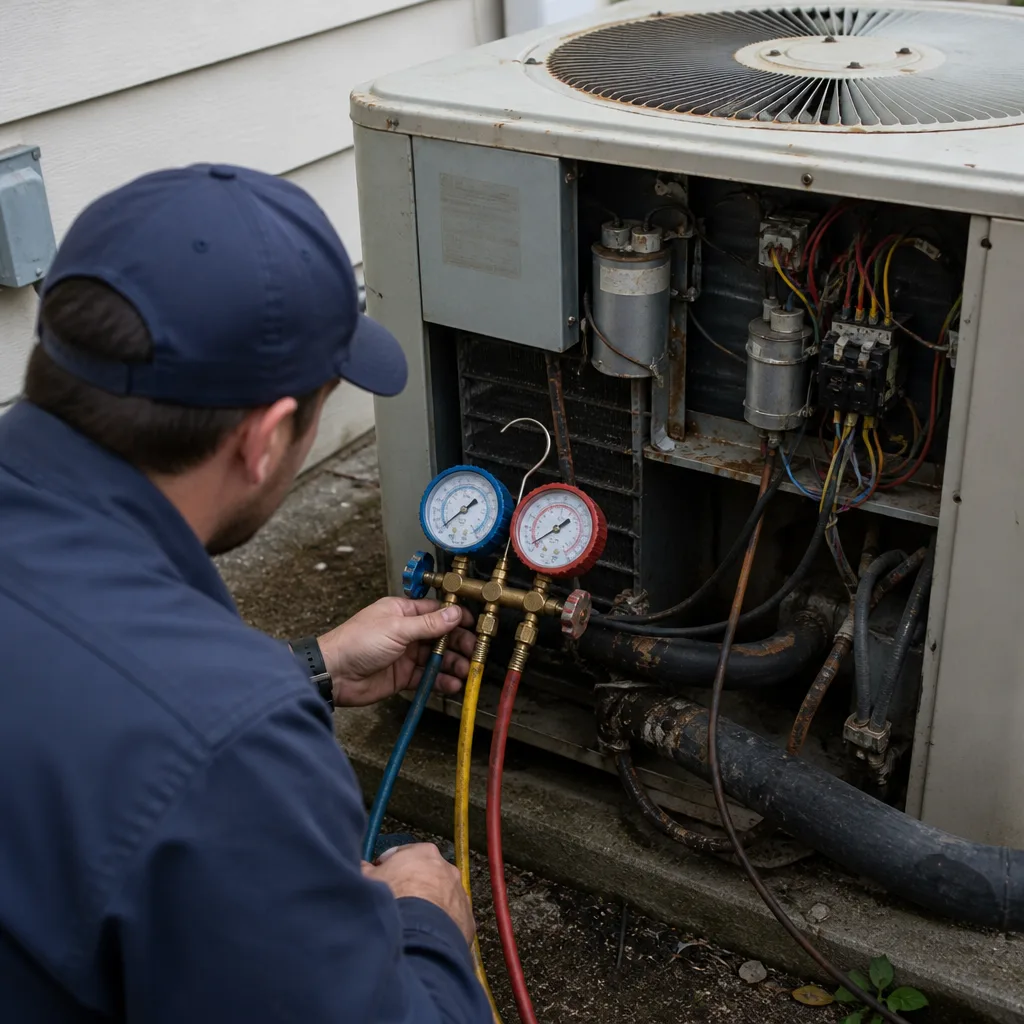 Before
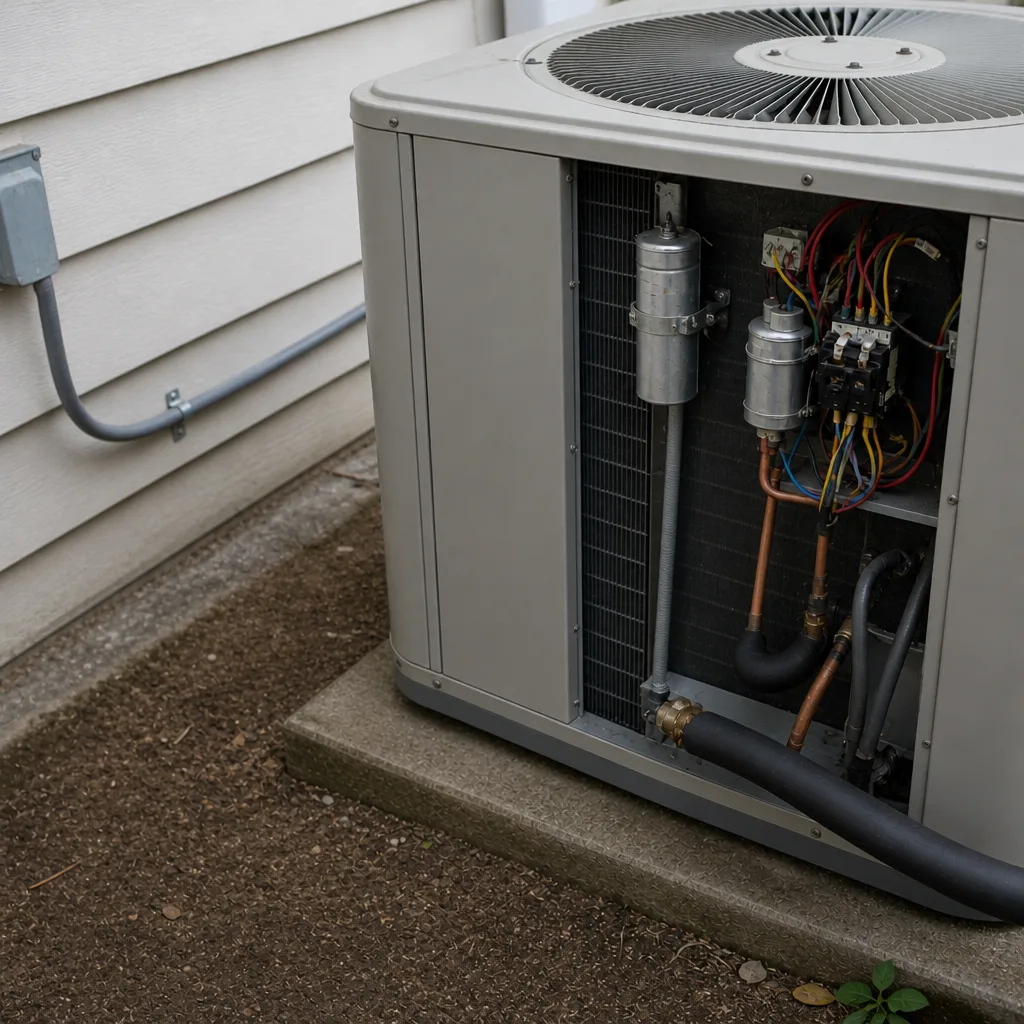 After
Can You Verify Quality Before the Technician Arrives?
Yes, and it’s a step most people skip. Before you book, spend ten minutes verifying what you can verify. You can complete most of this in a single sitting.
- Search DOPL. Confirm the license is active and matches the type of work.
- Ask about EPA 608. A phone call settles it.
- Ask about brand training. Name your brand and listen for specifics.
- Ask how a load calculation gets handled. Confirm Manual J before any installation quote.
- Ask for the estimate in writing. Written and itemized is the standard.
- Ask what happens if the diagnosis changes. A good company explains how it handles revision to the estimate and lets you approve any change.
We work on Carrier, Trane, Lennox, Goodman, Rheem, York, Daikin, Bryant, and American Standard. Our crew exists for climate-control work specifically. We aren’t a general contractor with HVAC on a menu of thirty trades. That focus shows up in the diagnostic process and in the questions we ask on the first call. You’ll see it when we talk to you.
Common Mistakes to Avoid
- Trusting reviews as a diagnostic predictor. Reviews tell you a company was polite and showed up. They don’t tell you whether the diagnosis was right. Verify credentials directly.
- Skipping the license check because they were referred. A referral is a useful lead, not a verification. Run the DOPL search anyway.
- Quoting a system size without a load calculation. Matching existing equipment feels safe, but existing equipment may already be oversized. Insist on Manual J.
- Accepting “we work on everything” as a brand answer. If the technician hasn’t had documented training on your manufacturer, the diagnosis is generic. This matters when your unit is a Carrier or a Lennox and the failure is in the control logic.
- Not asking about EPA 608. Refrigerant handling is a federal certification matter, and most homeowners never think to check.
- Signing a quote with vague line items. “Various repairs” is not a line item. Ask for specifics and expect the written estimate to look like an invoice.
- Accepting same-day pricing pressure. Deadlines invented to force a signature are a marker of a sales-driven operation, not a service-driven one.
How Do You Know If a Contractor Is Right for Provo Homes?
Provo has a specific combination that matters here: a climate with genuinely hot summers, a wide variety of housing ages, and a market with a lot of competition for HVAC work. A contractor who’s genuinely working in this market will know that the east bench neighborhoods and the older homes near downtown have very different systems, different duct layouts, and different common failure patterns. Ask them what they see most often in Provo.
Notice whether the answer is specific. A contractor who spends a lot of time in this city will have opinions about the equipment stock, the ductwork quality in different decades of builds, and the seasonal patterns that stress systems here. A contractor who flies in from a bigger metro or treats Provo as a service area will give you a generic answer.
You also want to know the response model. Ask what happens when you call at 9 at night with no cooling. A good answer names a process. We answer 24/7, and a call outside dispatch hours gets booked into the next opening, Sunday through Friday, 7am to 7pm. That’s a professional operation. Compare that answer against your other quotes.
When to Call a Professional
Some problems can wait for a scheduled appointment. Others can’t. Call a professional right away for no cooling during a heat wave, a burning or chemical smell near the furnace or air handler, a system that won’t turn off, water pooling near the indoor unit, refrigerant leaks, or any call involving gas lines or the electrical panel near the HVAC equipment. Those are safety matters, and they belong to a trained technician. Persistent issues that keep returning after a filter change are worth a service visit too, because recurring symptoms often mean the diagnosis was incomplete the first time. Same-day service is available, and getting a professionall assessment early usually costs less than waiting. AC Repair Provo offers free estimates in Provo – call (855) 657-5471.
Frequently Asked Questions
Look the contractor up in the Utah Division of Occupational and Professional Licensing public database, often called DOPL, and confirm the license is active and classified for HVAC work. Utah uses an S370 classification for residential solar and HVAC work. A license confirms the contractor met state requirements; it does not confirm diagnostic skill, so verify training and certification separately.
Manual J is the industry-standard calculation for how much cooling a specific home needs, based on square footage, windows, insulation, air leakage, and local temperatures. A system sized without it can end up oversized, which causes short cycling, uneven cooling, and early wear. Ask directly whether the contractor will run a Manual J before recommending a size. Anyone who skips it is guessing.
EPA Section 608 certification is a federal requirement for anyone who handles refrigerants, and it applies to the individual technician, not the company. You should ask whether the technician arriving at your door is certified, because it’s a legal requirement, not a formality. Call (855) 657-5471 if you want to confirm how a Provo contractor handles refrigerant work – estimates are free.
Repair is usually the right answer when the failure is a single component, like a capacitor, contactor, blower motor, or control board. Replacement becomes reasonable when the system is aging, major parts fail repeatedly, and repair costs climb relative to a new system. Ask the contractor to show you the diagnostic reasoning behind their recommendation, and to put repair and replacement side by side.
Ask a specific question: “Does your technician have documented manufacturer training on my brand?” If you own a Lennox and the answer is “we work on everything,” that’s a generic answer, not a brand-specific one. At AC Repair Provo, we work on Carrier, Trane, Lennox, Goodman, Rheem, York, Daikin, Bryant, and American Standard, so the diagnosis is matched to the equipment already installed.
Likely yes. Same-day service is available, and cooling failures during summer heat are treated with priority. Call (855) 657-5471. We answer 24/7, and dispatch runs 7am to 7pm, Sunday through Friday. Estimates are free.
The Bottom Line
The hiring process that protects you isn’t the popular one. It’s the technical one. Verify the DOPL license and confirm what it does and doesn’t certify. Insist on a Manual J load calculation before any installation quote. Ask the brand question and expect a specific answer. Confirm EPA 608 certification for anyone handling refrigerant. Read the quote line by line and treat vague items and same-day pressure as the warnings they are. Get the estimate in writing, free, and fixed. None of those questions requires technical expertise on your part, and every one of them filters out the contractors worth filtering out. If you’re searching for a Provo crew that already asks these questions of itself, that’s a good sign. Call (855) 657-5471. We answer 24/7. Fast dispatch from 7am to 7pm, Sunday through Friday.
AC Repair Provo is a cooling-first HVAC specialist that also handles furnace repair, which means the same team that diagnoses your AC in July is the one you can call when the heat fails in January. Whether you’re comparing quotes on Provo HVAC service or ready to schedule a repair, the standards in this guide apply.
Written by the team at AC Repair Provo, serving Provo since 2013.