
Last updated November 14, 2026
 AC repair
 Furnace & heating
 Heat pumps
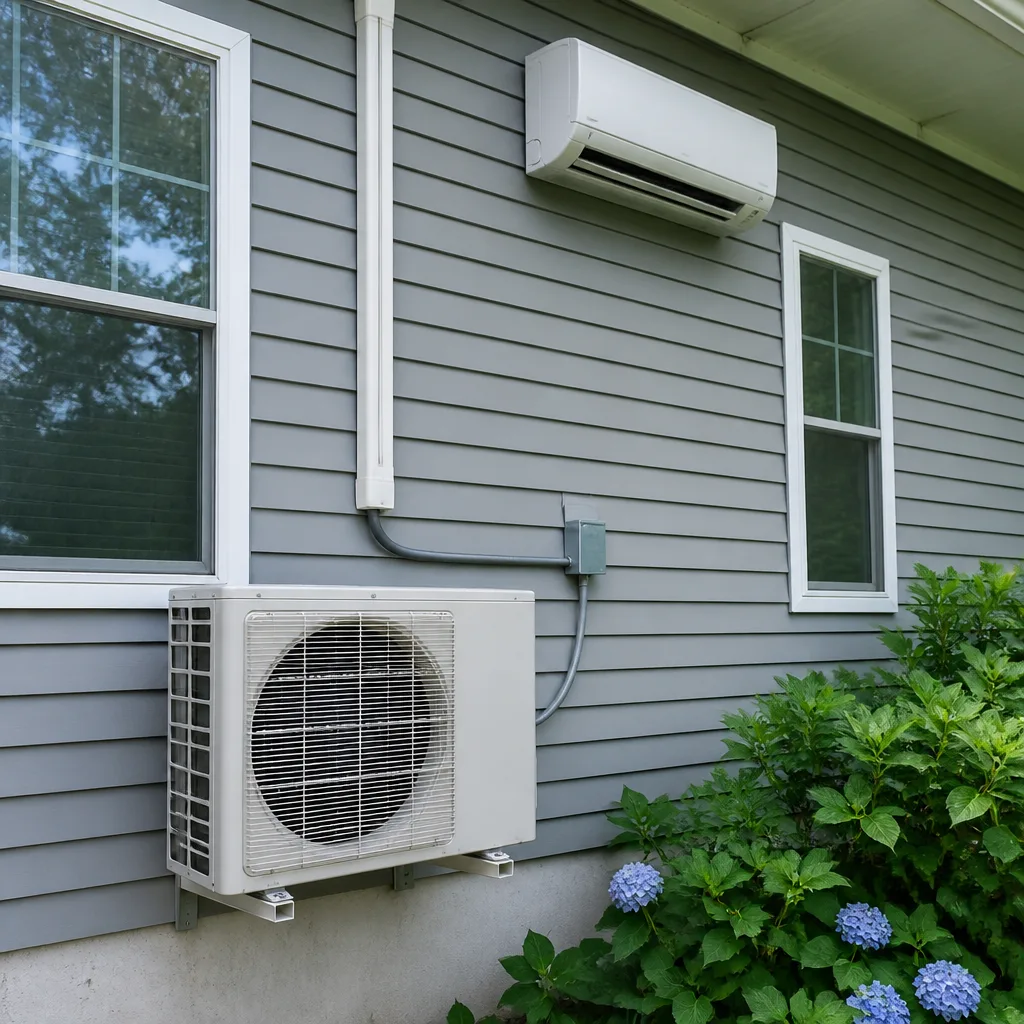 Ductless mini splits
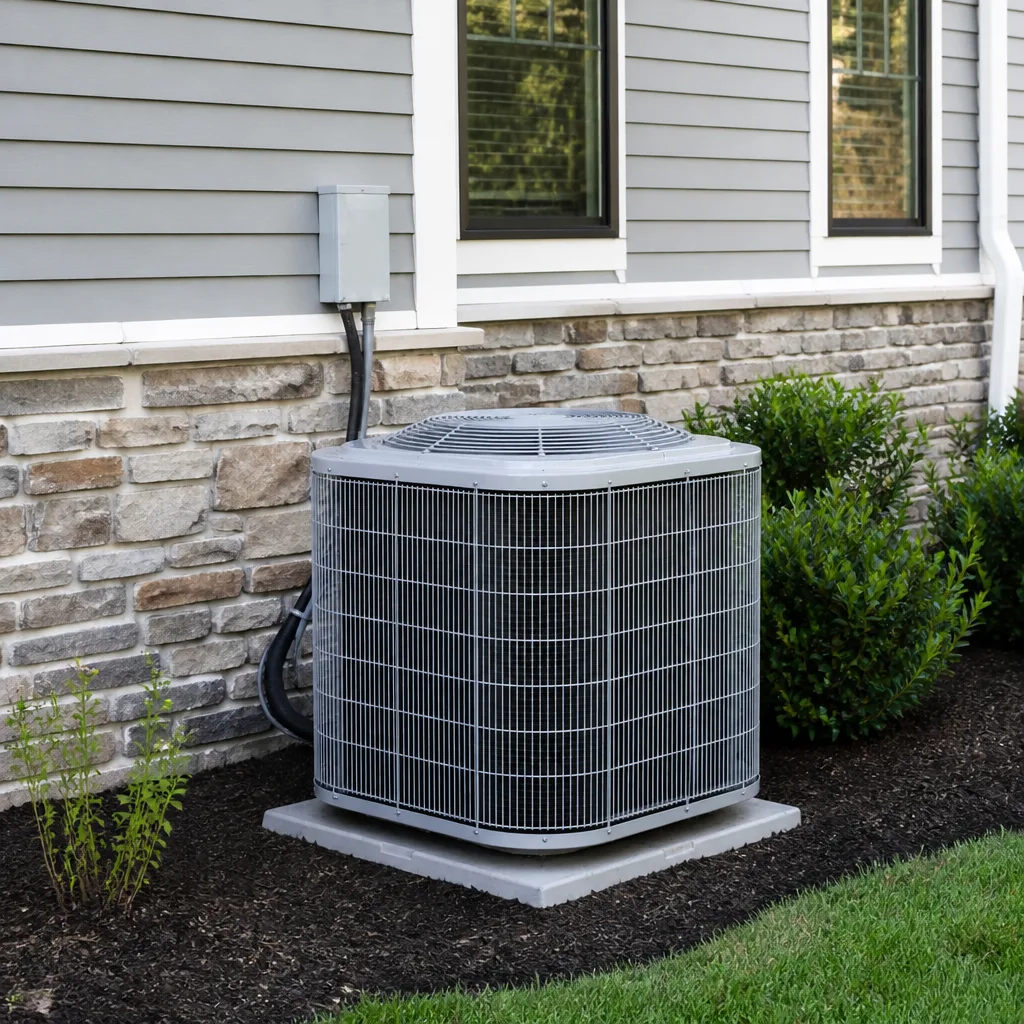 Carrier
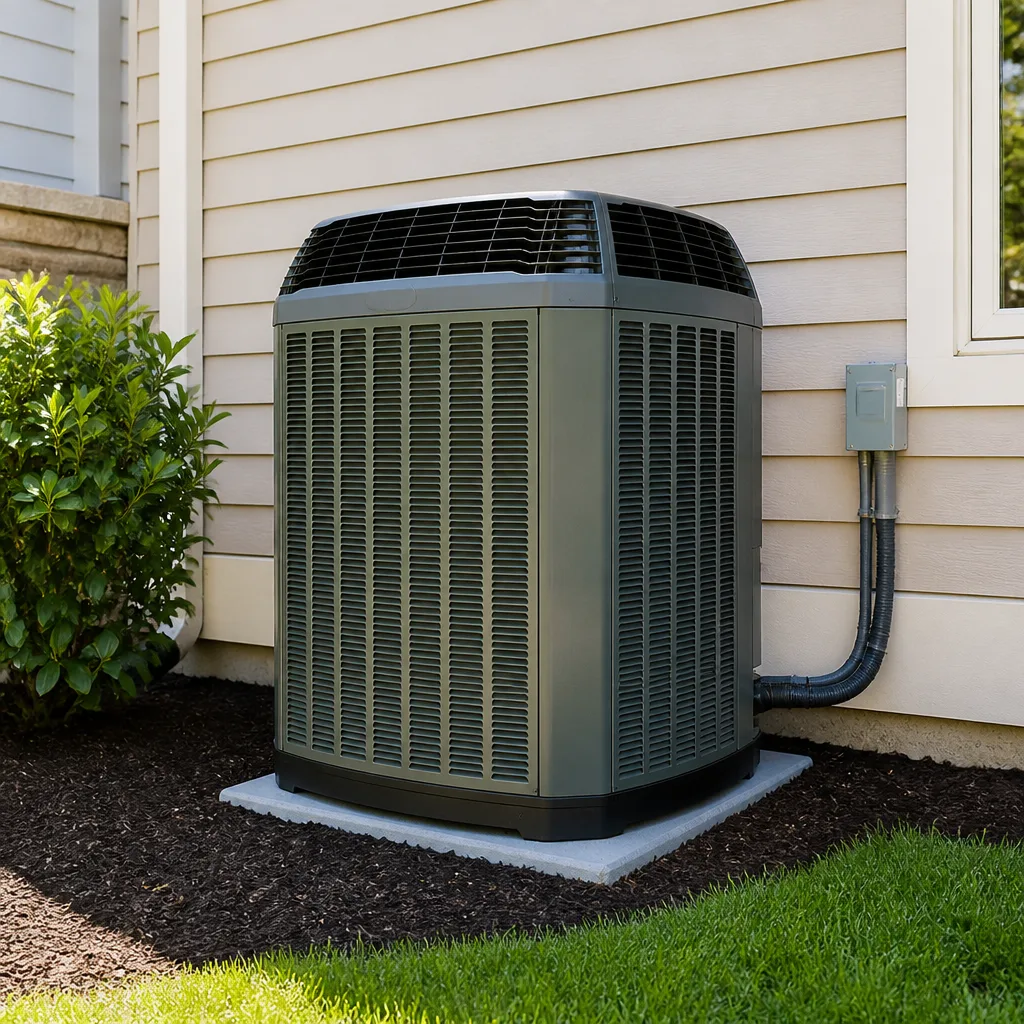 Trane
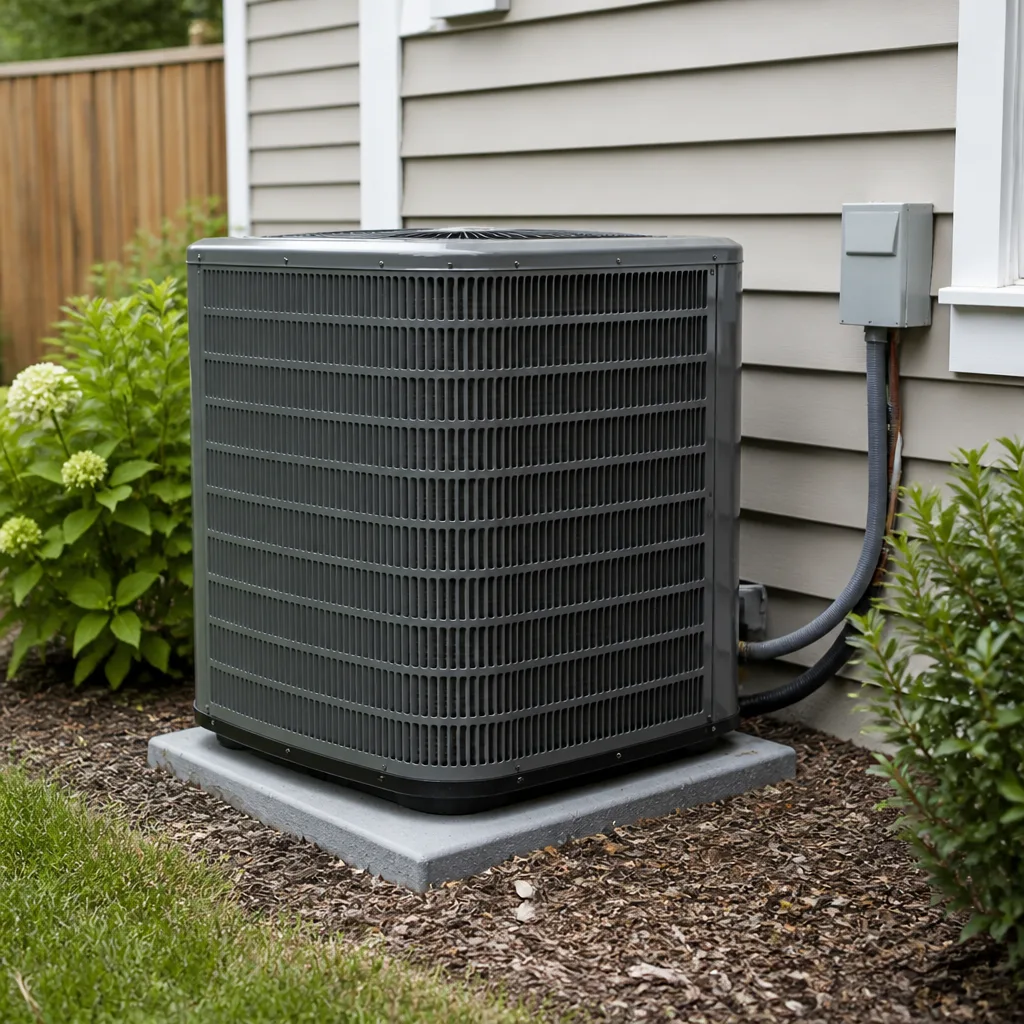 Goodman
Seasonal tune-up and full diagnostic on your Carrier, Trane, or Goodman system - readings shown to you before any repair is proposed
Diagnosis first, numbers second - you approve the repair price before a single part goes in.
Get your free estimateDIY vs Professional HVAC: The Provo Homeowner’s Decision Guide
Most homeowners who take on an HVAC repair themselves do it because they’re confident in their mechanical ability, not because they’ve read the regulations. That confidence is often misplaced. The real dividing line in Provo isn’t how handy you are. It’s federal law, warranty language, and the difference between solving a symptom and finding its cause. A furnace that won’t ignite can mean a failed igniter, a failing pressure switch, or a cracked heat exchanger, and the first two answers feel the same at the thermostat but read very differently at the meter and the flue. This guide draws those lines clearly so you can decide what to handle yourself and what actually requires a trained technician, without false confidence in either direction. You’ll learn which tasks are genuinely open to you, when DIY costs more than a service call, and how to protect your warranty while doing it.
Quick Answer
The tasks you can safely and legally do yourself are limited: air filter changes, condensate drain clearing, register cleaning, and thermostat replacement. Everything involving refrigerant, gas piping, electrical panel work, or combustion components requires licensed or EPA-certified professionals. In Provo, the smart DIY boundary is maintenance-level upkeep; repairs that touch sealed refrigerant systems or gas supply cross into work that federal and Utah law reserves for certified technicians, and unlicensed work can void manufacturer warranties.
Styles & brands we work with
- AC repair
- Furnace & heating
- Heat pumps
- Ductless mini splits
- Carrier
- Trane
- Goodman
Table of Contents
- The Legal Bright Line: What You Can and Can’t Touch
- Why DIY Diagnosis Usually Misses the Root Cause
- High-ROI DIY Tasks for Provo Homeowners
- Warranty Implications of DIY Work
- When a Professional Diagnosis Pays for Itself
- How Provo’s Climate Shapes the Decision
- Common Mistakes to Avoid
- When to Call a Professional
The Legal Bright Line: What You Can and Can’t Touch
The legal boundary for HVAC work is clearer than most homeowners assume, and it’s set primarily by federal regulation, not just state licensing. The Environmental Protection Agency’s Section 608 rules under the Clean Air Act make it illegal to knowingly vent refrigerants into the atmosphere, and they require EPA 608 certification to purchase refrigerant and to service or dispose of equipment containing it. That certification is not something a homeowner can work around by ordering supplies online or asking a friend in the trade to “hand off” a cylinder. Without it, you cannot legally buy, handle, or charge R-410A, R-32, or any other refrigerant. Full stop.
What you can legally do in a Utah home is more limited than the internet suggests. Here’s roughly where the boundary sits for a homeowner in Provo:
- Open to homeowners: Replacing air filters, cleaning return and supply registers, clearing a condensate drain line, swapping a thermostat (low-voltage), vacuuming coils from the outside of the cabinet, and resetting a tripped breaker at the panel without touching the internal wiring.
- Requires a licensed electrician or HVAC technician: Any work inside the electrical panel, replacing contactors, capacitors, or blower motors, running new circuits, or changing disconnect wiring.
- Requires a licensed gas fitter or HVAC technician: Any work on gas piping, gas valves, burners, or the flue and venting system on a furnace.
- Requires EPA 608 certification: Any task that opens the sealed refrigerant circuit, including adding refrigerant, replacing a coil, or diagnosing a suspected leak.
- Requires a permit from Provo City: Replacing an entire HVAC system or making structural changes to the venting. A furnace or AC swap typically needs a mechanical permit, so confirm with the city before scheduling install work.
If a job falls in the bottom three categories, the answer isn’t “call us eventually.” It’s “don’t attempt it.” Refrigerant under pressure and natural gas are not forgiving of a learning curve, and the injury risk is real. Licensed and insured technicians carry the certification and the coverage for exactly this reason. When you need AC Repair Provo for a job that crosses that line, the crew arrives ready to work on the equipment already in your home.
Why DIY Diagnosis Usually Misses the Root Cause
Here’s the pattern we see most often: a system stops cooling, the homeowner searches the symptoms, decides the capacitor is the culprit, swaps it for a $20 part from a big-box store, and gets two weeks of cold air before the same failure returns. The capacitor wasn’t the disease. It was a symptom. A failing compressor, a bad start relay, or voltage sag from a weak contactor will keep cooking capacitors until the actual load problem is addressed. You replaced the fuse. The short is still there.
This is the diagnostic gap that decides the DIY-versus-professional question far more often than mechanical ability. A technician doesn’t just look at the part that failed. They measure amp draw, check static pressure, compare refrigerant superheat and subcooling against the manufacturer’s spec, and in our case, they check those numbers against the specific brand in your home. That’s what brand-specific diagnosis means in practice. A Rheem condenser has different target pressures than a York unit, and a Daikin inverter system behaves differently again. Generic troubleshooting charts from a forum don’t account for those differences. When we open a system and know the manufacturer, we’re checking it against engineering data, not a YouTube video.
The cost math is where this becomes a homeowner decision rather than an academic one:
- You buy a likely-failed part based on symptom match: typically $40-$150 for a capacitor, contactor, or igniter.
- The system runs briefly, then fails again. You buy a second part: another $40-$150.
- You finally call for diagnosis, and the real cause is confirmed as a compressor or control board issue that the first parts never addressed.
- Total spent: two parts plus a diagnostic visit and the correct repair, versus one diagnostic visit and one repair from the start.
A proper diagnosis at the front end prevents the cycle. It also prevents the more expensive version of this story, where a homeowner replaces a compressor without confirming the actual electrical fault, and the new compressor fails on startup because the underlying problem is still present. We’ve seen that outcome enough times to say it plainly: at some point, guesswork stops being a bargain.
High-ROI DIY Tasks for Provo Homeowners
Not every task is a trap. A short list of maintenance work is genuinely in your wheelhouse, saves real money, and keeps the system efficient between professional visits. Here are the ones we’d hand to any homeowner without hesitation, with specifics rather than just permission.
1. Air filter changes. This is the single highest-return task you can do. In Provo’s dusty spring season, when canyon winds push fine particulate into neighborhoods across the valley, filters load faster than the manufacturer’s 90-day rule suggests. Check monthly during April, May, and June, and change when the filter is visibly gray. A 1-inch pleated filter is right for most residential systems. Don’t upgrade to a high-MERV filter unless the system was designed for it; a restrictive filter starves airflow and can freeze a coil in summer. Write the install date on the filter edge in pencil so you remember.
2. Condensate drain clearing. During Provo’s dry summer, your AC pulls a surprising amount of moisture out of the air, and that water has to leave through the condensate line. Algae and dust build up in the trap and the drain, and the result is water on the floor and a shutdown on a float switch. Once a season, find the drain line where it exits the indoor unit, pour a cup of distilled white vinegar into the cleanout, and check for slow drainage. If it’s clogged, a wet-dry vacuum on the outdoor end of the line often clears it. This is legitimate homeowner maintenance on most systems.
3. Thermostat replacement. Swapping a thermostat is a low-voltage job, and the wiring is color-coded. Turn off the breaker first, photograph the wiring before you disconnect anything, and match the wires to the new thermostat’s labels. If your home has a communicating system or a proprietary thermostat on a Daikin or Bryant unit, stop and call; those aren’t standard 24-volt wiring and a wrong swap can damage a control board.
4. Register and return cleaning. Pull the grilles, vacuum the fins, and dust the interior of the boot. This won’t fix airflow problems, but it removes dust that recirculates back into the filter and reduces the load on the blower. In homes near the BYU campus with older ductwork, registers often accumulate years of dust and pet hair that a quick pass clears.
None of these four require certification, a permit, or special tools beyond a screwdriver and a vacuum. They also don’t touch refrigerant or gas. If you stick to this list and stop at the cabinet door, you’ll get most of the DIY savings with none of the liability.
Warranty Implications of DIY Work
This is the part homeowners most often discover too late. Manufacturer warranties, including the standard 5- or 10-year parts warranties on equipment from Rheem, York, Daikin, Bryant, and others, are written with the assumption that installation and repair work is done by licensed professionals. When a non-licensed person opens a sealed system, replaces a component, or installs a part not obtained through a licensed distributor, the manufacturer has grounds to deny a warranty claim on that equipment. That doesn’t mean your filter changes void the warranty. It means the line-item warranty on a compressor or control board can be voided by unlicensed work on that component.
If you do handle something that requires a paper trail, here’s how to protect yourself:
- Keep receipts for every part you buy. If a part fails under its own manufacturer coverage, you’ll need the purchase date and source.
- Photograph every step. Before-and-after photos of wiring and component swaps give you documentation if a warranty claim is ever challenged.
- Don’t source parts from unauthorized sellers. Gray-market parts can carry no warranty at all, and some manufacturers won’t honor claims on components without an authorized-distributor trail.
- Save every professional invoice. If a licensed technician diagnosed the system last year and you did maintenance work yourself in between, the invoice chain helps preserve the overall equipment warranty.
- Read the warranty document for the specific brand installed in your home, not a generic online summary. Rheem’s terms differ from Bryant’s terms, which differ from Daikin’s inverter-specific language.
When a repair crosses into licensed territory, keeping the paper trail means using a company that documents the work fully. We can work with your manufacturer on warranty claims and provide the documentation those claims require. If you need help understanding what coverage applies to the equipment in your home, call AC repair and we’ll walk through it before we touch anything.
When a Professional Diagnosis Pays for Itself
The math on professional diagnosis isn’t always close, but there’s a set of scenarios where it’s genuinely obvious. Consider the typical setup: a service call costs a modest amount, and a misdiagnosed part replacement – a compressor, a control board, an ECM blower motor – runs several hundred to over a thousand dollars. The break-even isn’t even a question when the wrong guess costs 10 to 20 times the diagnostic. A trained technician confirms the root cause in one visit, and you buy the right part once. If you replace a compressor at $900 and the real problem was a failed start capacitor at $30, the diagnostic call would have been the bargain of the decade.
Beyond the raw part math, several situations flip the decision toward a professional call every time:
- The system is under 5 years old. A premature failure is often a warranty repair. DIY work on a young system risks voiding the coverage that would have paid for the fix.
- The symptom is intermittent. A system that trips a breaker every few days, or cools poorly only on the hottest afternoons, almost never points to a single part. It points to a relationship between load, refrigerant charge, and airflow that requires gauges and meters, not a guess.
- You’ve already replaced one part and it didn’t fix the problem. One failed attempt is a signal to stop. The second guess rarely does better.
- You smell gas, see burnt wiring, or hear the compressor hard-start repeatedly. These aren’t parts to swap. They’re safety conditions that need a licensed technician on site.
- The system uses inverter technology. Modern Daikin and Bryant variable-speed equipment isn’t homeowner-serviceable. The diagnostics run through manufacturer software, and the boards are not swappable without it.
In our experience, the earlier a homeowner calls for diagnosis, the smaller the eventual repair bill. The DIY stories that end well are the ones where someone stuck to filter changes and thermostat swaps. The ones that end expensively share the same opening scene: “I thought it was the capacitor, so I…”
How Provo’s Climate Shapes the Decision
Provo sits in a high-desert valley at the foot of the Wasatch Range, and that geography drives specific HVAC realities no generic national guide will tell you. Summer afternoons climb into the mid-to-high 90s consistently, sometimes higher during July and August heat waves, and the cooling load on Provo homes is substantial. Where the climate gets interesting is the swing: overnight temperatures often drop into the 60s even in July, so a system that runs flat-out all afternoon may cycle off hard at night. That swing produces more thermal cycling on the equipment than a coastal climate does, and the small electrical components that fail most often – capacitors, contactors, relays – take that pulse every day of summer.
The other factor is dust. Between canyon winds in spring and the dry conditions of summer, Provo homes pull fine particulate into return air all season. That loads filters faster than the calendar suggests and, in older homes without a good filter seal, deposits dust directly on the evaporator coil. A dirty coil drops efficiency and can lead to refrigerant symptoms that look like a leak but aren’t. Regular filter changes are the highest-leverage maintenance task in Provo specifically because of this, more so than in humid or coastal climates where the dust load is lower.
Winter flips the story. Provo heating days are cold enough that a furnace failure becomes urgent, and the dry air means return filters and blower wheels accumulate dust fast. Furnace annual service isn’t just about efficiency; it’s a safety inspection of the heat exchanger and venting, and no homeowner should try to inspect a heat exchanger themselves. A cracked heat exchanger can introduce combustion gases into the airstream, and that requires professional diagnosis with a camera and combustion analysis, not a flashlight and a courage. If your furnace is more than 8 years old and hasn’t been professionally inspected, that’s a Provo-specific reason to bring in a technician even if nothing is currently wrong.
For homeowners who decide to replace aging cooling equipment to keep up with this climate, AC installation involves load calculations and equipment matching that need to be done correctly for the house and the valley, not pulled from a generic chart. The same team handles furnace repair in the same visit window, which keeps the year-round picture coherent rather than split between two contractors. If you’re looking for the full picture of how climate and neighborhood influence your equipment choices in Provo, the localized context is worth reading before you schedule.
Common Mistakes to Avoid
- Assuming the filter is fine because it’s only 30 days old. In Provo’s spring dust season, a 1-inch filter can load in three weeks. Check it visually, don’t just trust the calendar. A loaded filter starves the coil and drives up the bill in a way that looks like a refrigerant problem.
- Replacing a capacitor without checking the start circuit. The failed part is often the second domino, not the first. Swapping a capacitor into a system with a failing relay or a weak contactor is a guarantee of repeat failure.
- Using a high-MERV filter “for cleaner air.” Without a system rated for it, a high-MERV filter chokes airflow, ices the evaporator, and stresses the blower motor. Filter specs are engineering, not preference.
- Renting a vacuum pump and buying refrigerant online. Even apart from legality, releasing or mishandling refrigerant is a federal violation and a serious safety risk. Don’t.
- Ignoring a float-switch trip as “a one-time thing.” A condensate switch that trips once will trip again; the underlying drain is blocked or restricted. Clear it or call, but don’t reset and forget.
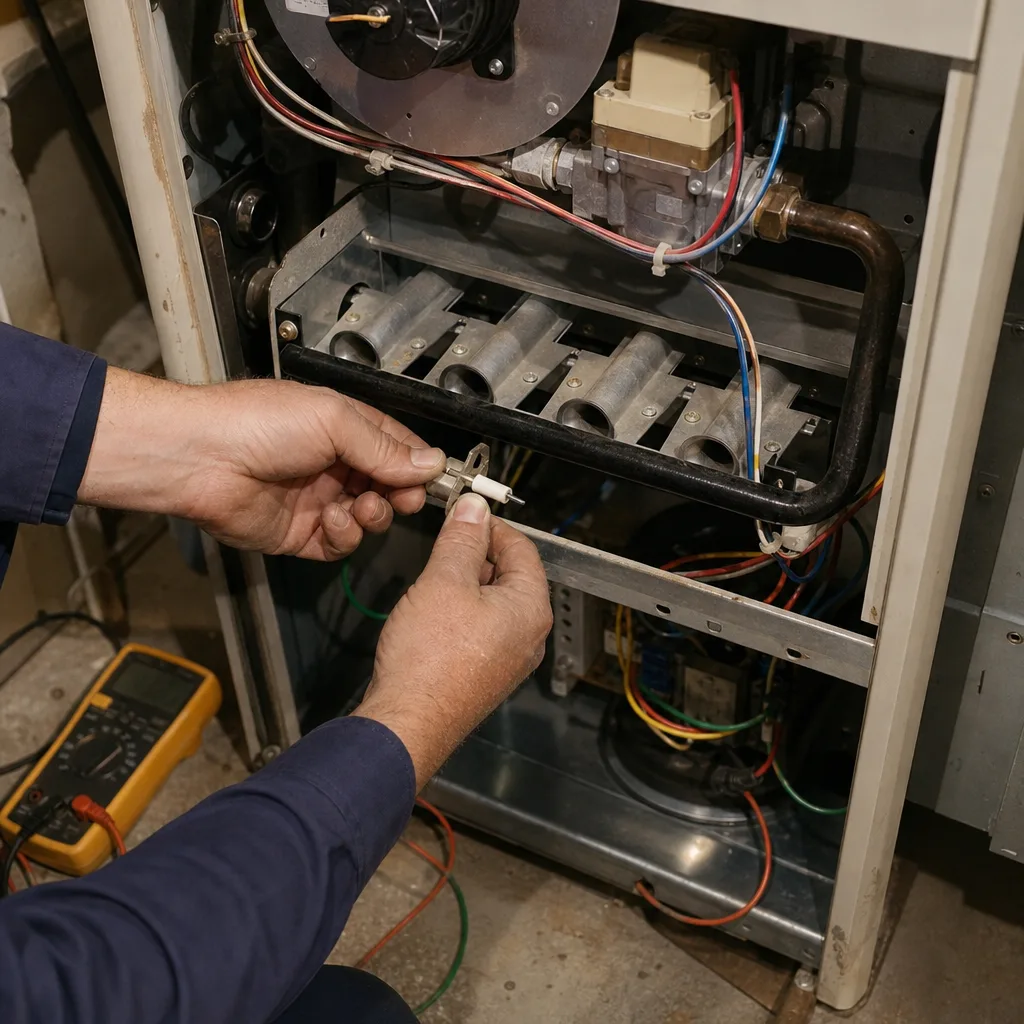
- Opening the furnace cabinet to “check the flame.” The flame sensor and igniter look simple. The gas train behind them doesn’t. Any gas-side inspection requires a licensed technician, and a furnace that fails to light is a technician call, not a tinkering opportunity.
- Doing unlicensed work on a system still under manufacturer warranty. The warranty coverage you’ll lose in the event of a component failure is worth more than the labor you saved. Read the warranty document for your specific brand before you open the cabinet.
When to Call a Professional
Call a professional when the work touches refrigerant, gas, the electrical panel, or combustion components. Also call when the symptom is intermittent, the system is under 5 years old, or you’ve already replaced a part and the problem came back. In Provo, a furnace that won’t light, an AC that trips a breaker, or a system that vents water on the floor are all scenarios that should trigger a technician call, not a search-and-swap session. Diagnosing the cause correctly in one visit is worth more than the savings from guessing. AC Repair Provo offers free estimates in Provo. Call (855) 657-5471 for a free estimate. We answer 24/7. Fast dispatch from 7am to 7pm, Sunday through Friday. We work on the brand you already own, including Rheem, York, and Daikin, with a diagnosis matched to the specific equipment in your home.
See the difference
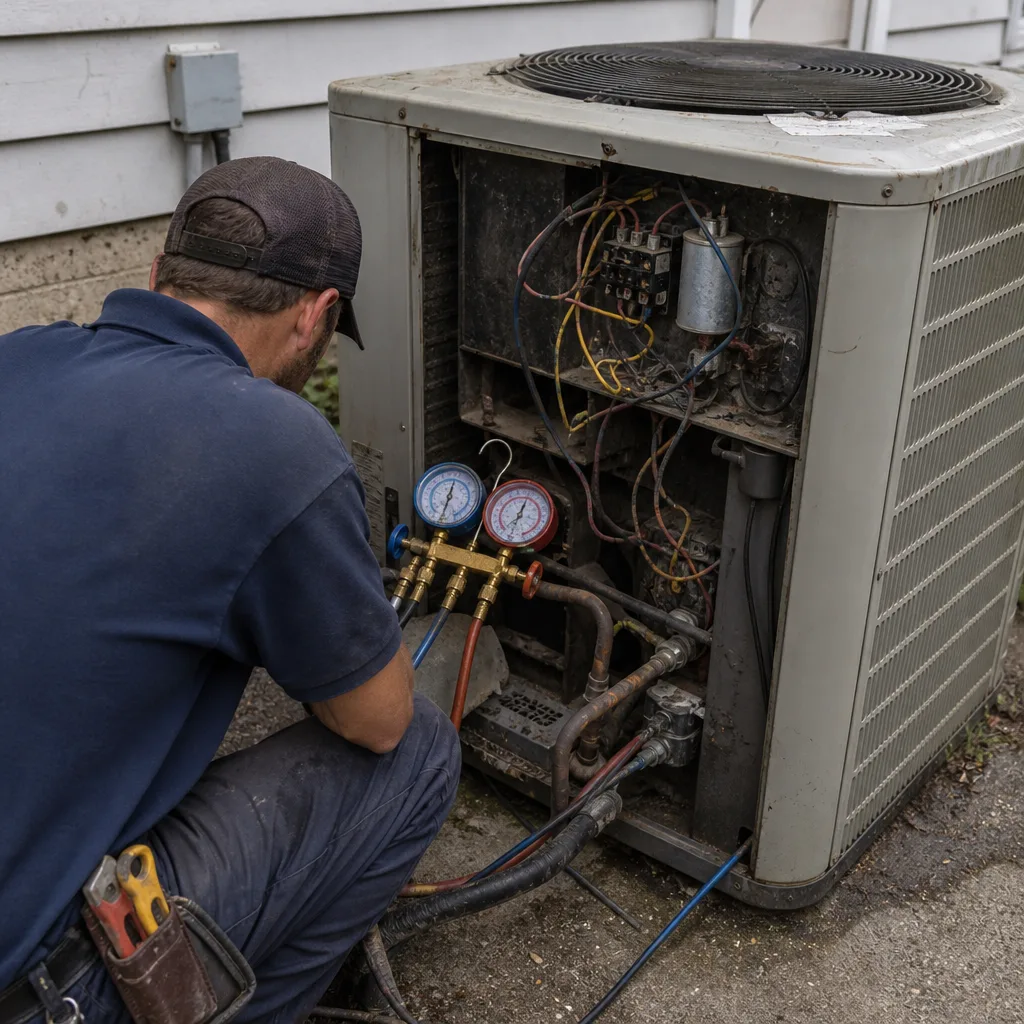 Before
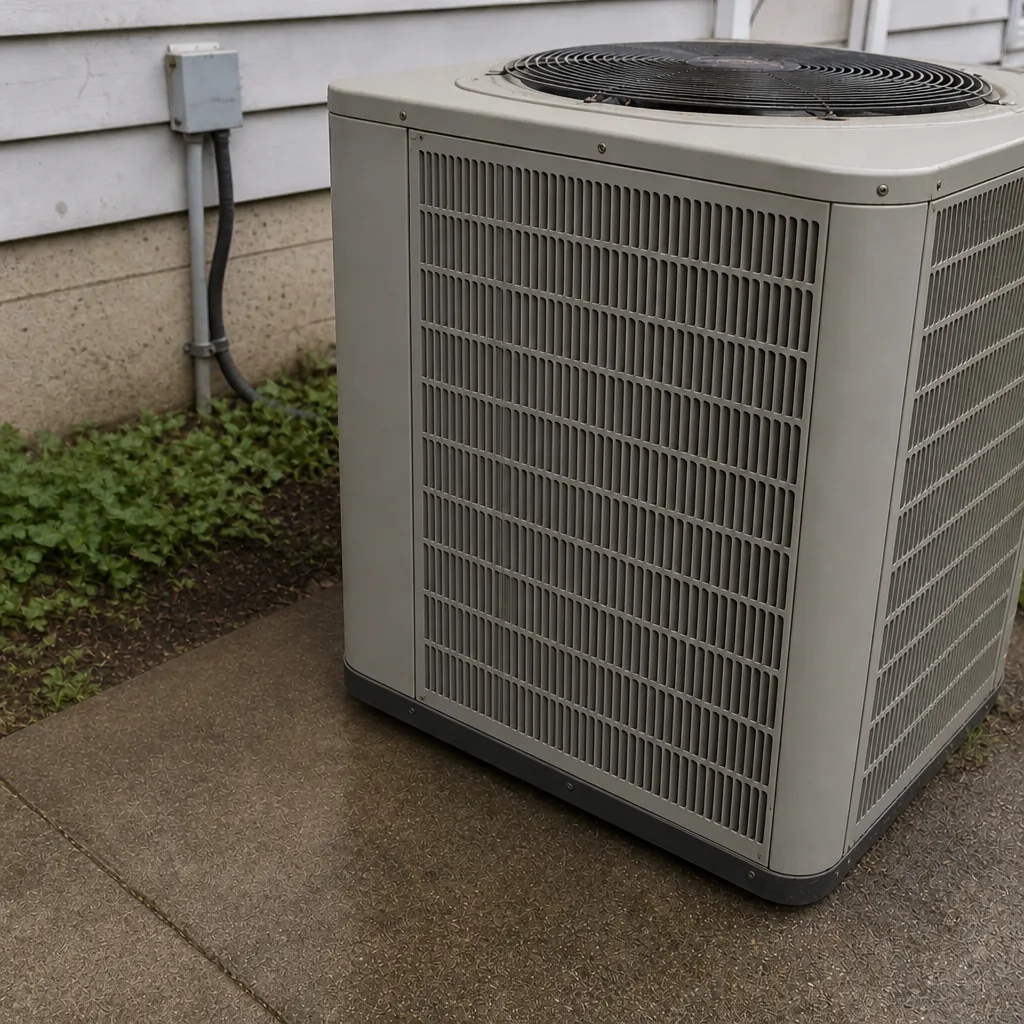 After
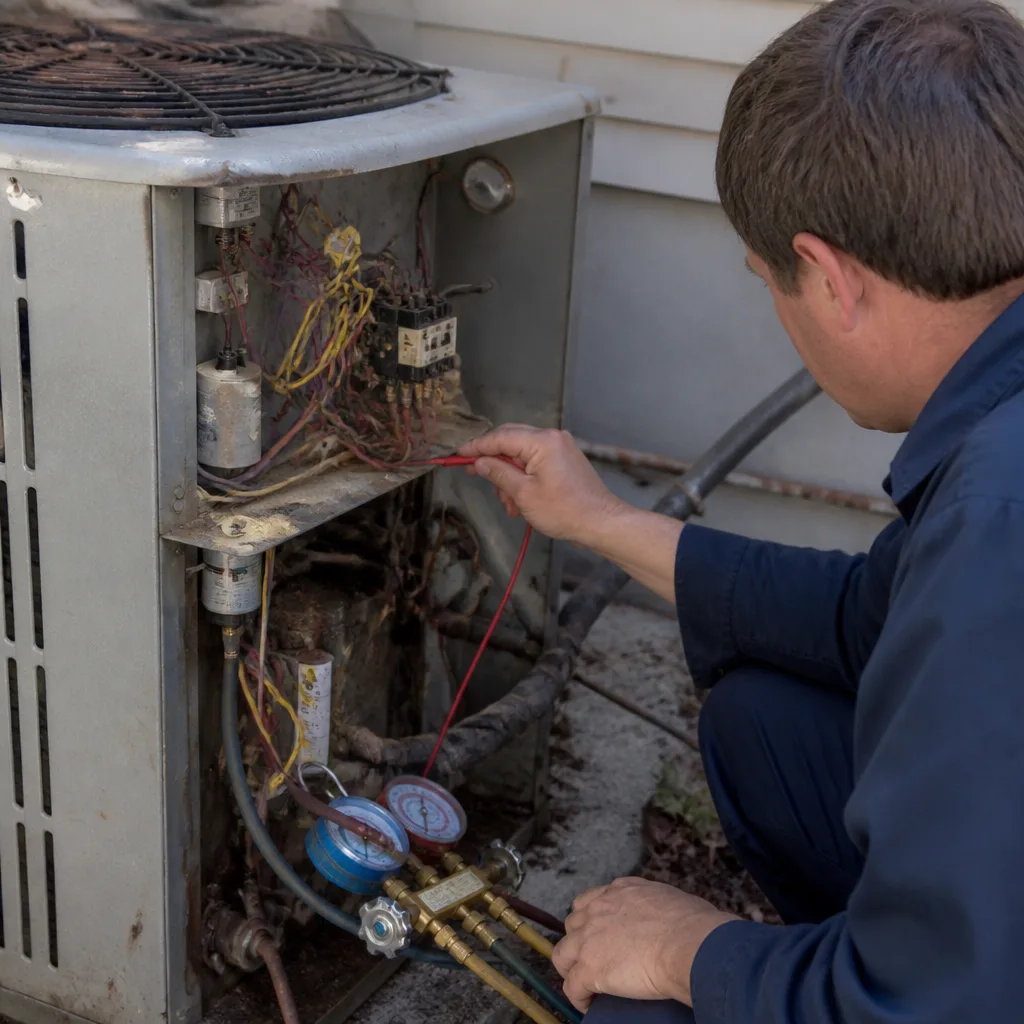 Before
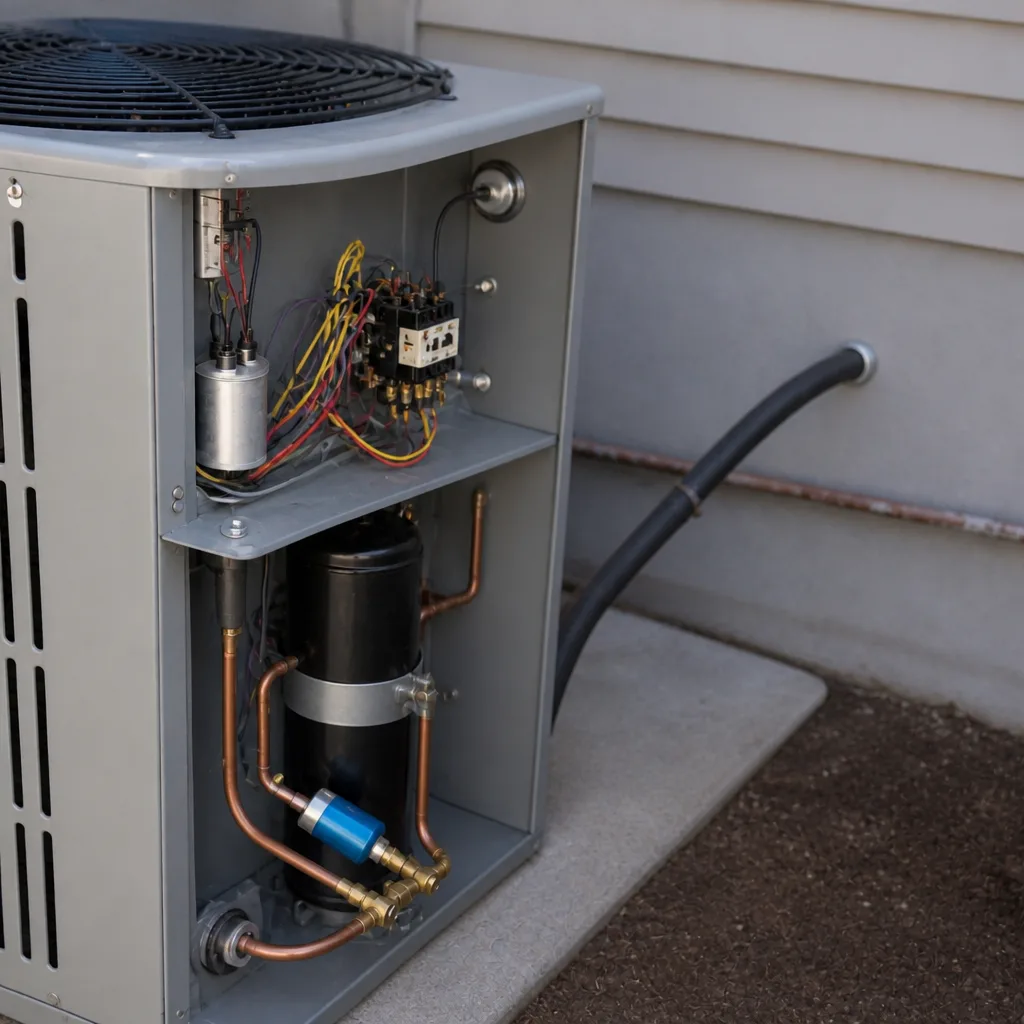 After
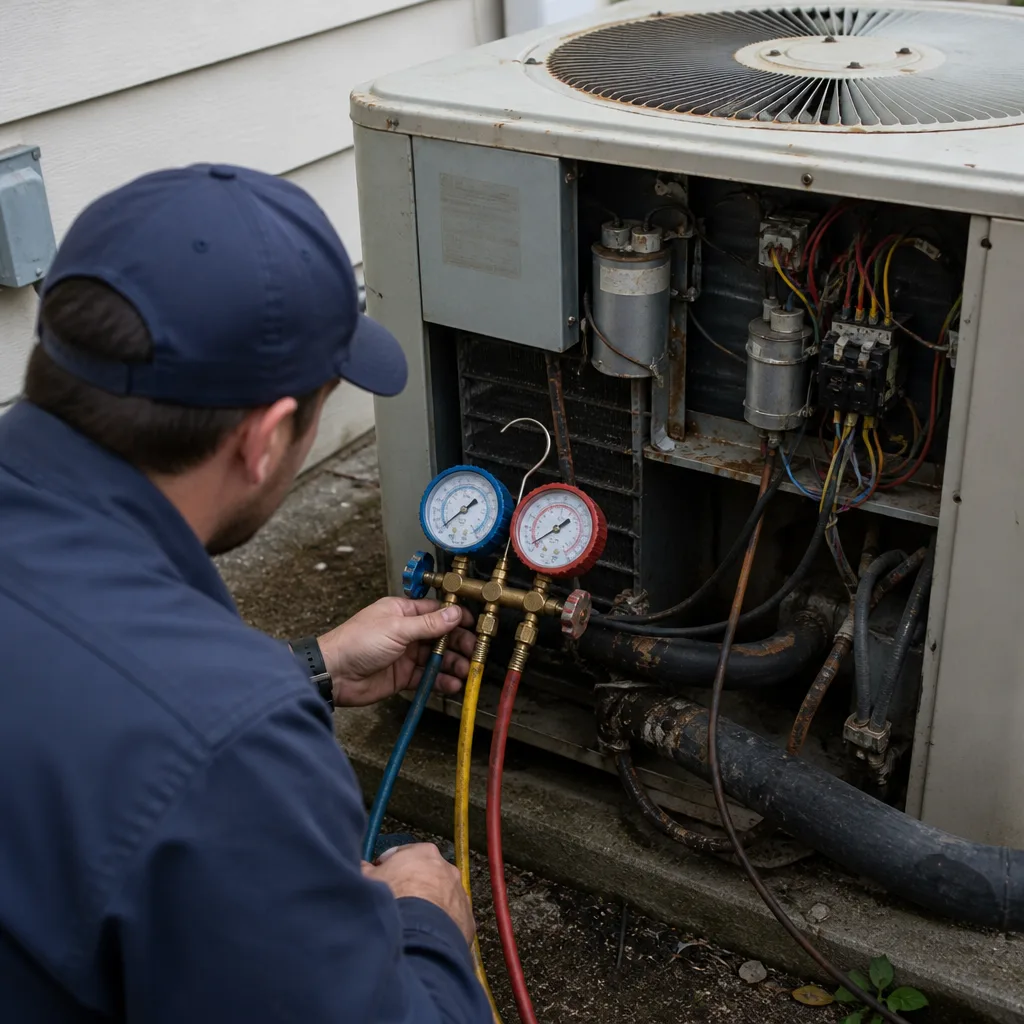 Before
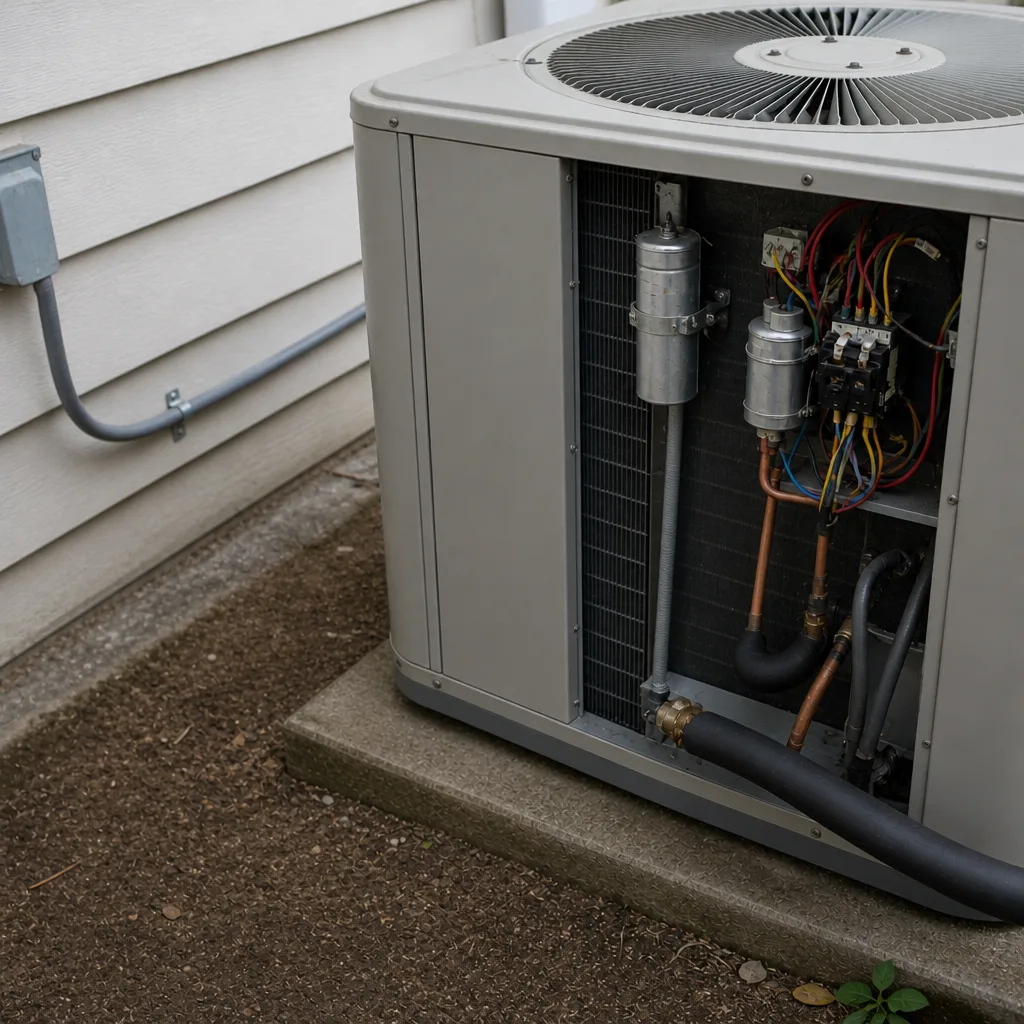 After
Frequently Asked Questions
No. Federal EPA Section 608 regulations require certification to purchase and handle refrigerant, regardless of mechanical ability. That means you cannot legally buy R-410A or any other refrigerant without certification, and handling it without certification is a federal violation. If your system needs refrigerant, the job requires a certified technician. Call (855) 657-5471 for service; we answer 24/7 and dispatch from 7am to 7pm, Sunday through Friday.
Usually not, if it’s a standard low-voltage swap on non-communicating equipment, but check the specific warranty language for your brand. Rheem and Bryant residential warranties generally allow thermostat replacement, but a proprietary or communicating system swap done wrong can damage a board and complicate coverage. If your thermostat is branded and ties into the equipment, call first. Call (855) 657-5471 for a free estimate if you want the swap done with documentation.
You can’t reliably tell from the outside. A failed capacitor, a bad relay, and a failing compressor all produce a “system won’t start” symptom at the thermostat. A technician checks capacitance, start winding resistance, and amp draw against the manufacturer spec for your brand. That’s the diagnostic gap that matters. If your outdoor unit hums and won’t start, call (855) 657-5471 before you buy a part.
Filter changes, register cleaning, condensate drain clearing, and low-voltage thermostat swaps are the safe list. In Provo specifically, check your filter monthly during spring dust season. Stop at the cabinet door: everything beyond that either needs refrigerant certification, a gas license, or electrical panel access. Call (855) 657-5471 for a free estimate when you’re ready for a professional annual service.
No. A 4-year-old system failing is likely a warranty claim, and unlicensed work can jeopardize that coverage. Call for diagnosis first so the root cause is confirmed and documented. If you need the call, (855) 657-5471 gets you scheduled. We answer 24/7; fast dispatch from 7am to 7pm, Sunday through Friday.
No, not legally in most cases. AC installation requires a permitted mechanical installation, refrigerant charging with an EPA 608-certified technician, electrical hookups, and manufacturer-warranty registration, and many manufacturers will not honor warranty on self-installed equipment. A licensed installation protects your equipment warranty and passes inspection. Call (855) 657-5471 for a free estimate on AC installation done to code.
What Makes Professional Diagnosis Worth the Call
We work on the brand you already own, and that matters in the DIY-versus-professional decision because it changes what a diagnosis actually costs you in time. When a technician opens the cabinet on a Rheem or a York system and knows the specific troubleshooting tree for that manufacturer, the diagnosis lands in one visit. Our technicians are certified across nine leading HVAC brands, including Carrier, Trane, Lennox, Goodman, Rheem, York, Daikin, Bryant, and American Standard, so the equipment in your home is the equipment we know.
Our work is focused on three things: AC repair, AC installation, and furnace repair. That’s it. We’re not a generalist contractor stretching across dozens of trades; every technician on a Provo call is there specifically for climate-control work. That focus is why our diagnosis is brand-specific rather than generic, and why the answer we give is based on your existing equipment and budget, not on a manufacturer relationship pushing a deal. We don’t have a dealership to feed, so there’s no pressure to switch brands.
HVAC repair isn’t a commodity. In the summer heat of Provo, getting it right the first time matters in a way that generic service calls don’t. Call (855) 657-5471 for a free estimate. We answer 24/7. Fast dispatch from 7am to 7pm, Sunday through Friday, and we’re closed Saturday. A call outside dispatch hours is booked into the next opening, Sunday through Friday, 7am to 7pm.
The Bottom Line
The DIY-versus-professional HVAC decision in Provo comes down to three lines: legality, warranty, and diagnosis. Filters, registers, condensate drains, and low-voltage thermostats are yours to handle, and doing them well saves real money. Refrigerant, gas, electrical panel work, and combustion components belong to licensed, certified technicians, full stop. Between those two zones sits a diagnostic gap where guesswork costs more than a service call, and that gap is where a brand-specific diagnosis pays for itself every time. If you’re unsure which side of the line your task is on, call (855) 657-5471 for a free estimate. We answer 24/7, and we dispatch from 7am to 7pm, Sunday through Friday.
Written by the team at AC Repair Provo, serving Provo since 2013.