
Last updated November 14, 2026
 AC repair
 Furnace & heating
 Heat pumps
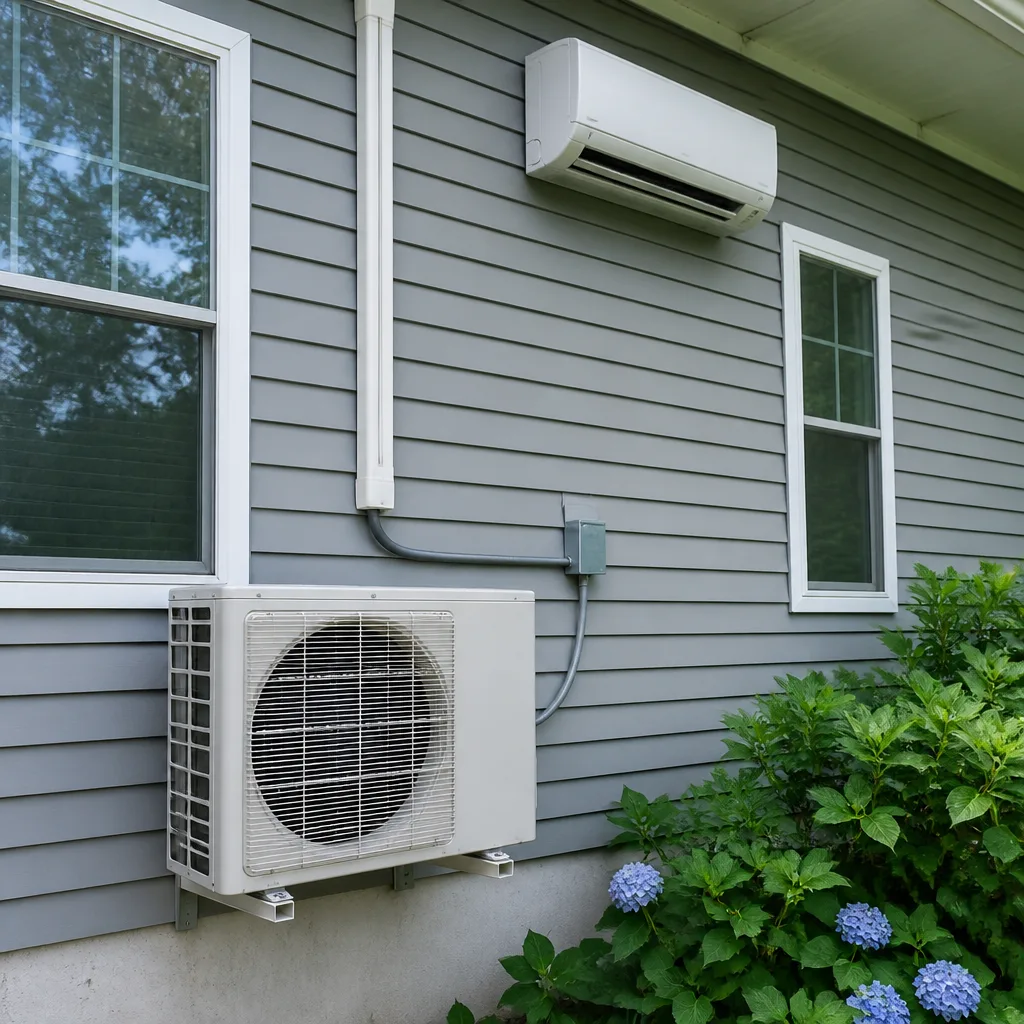 Ductless mini splits
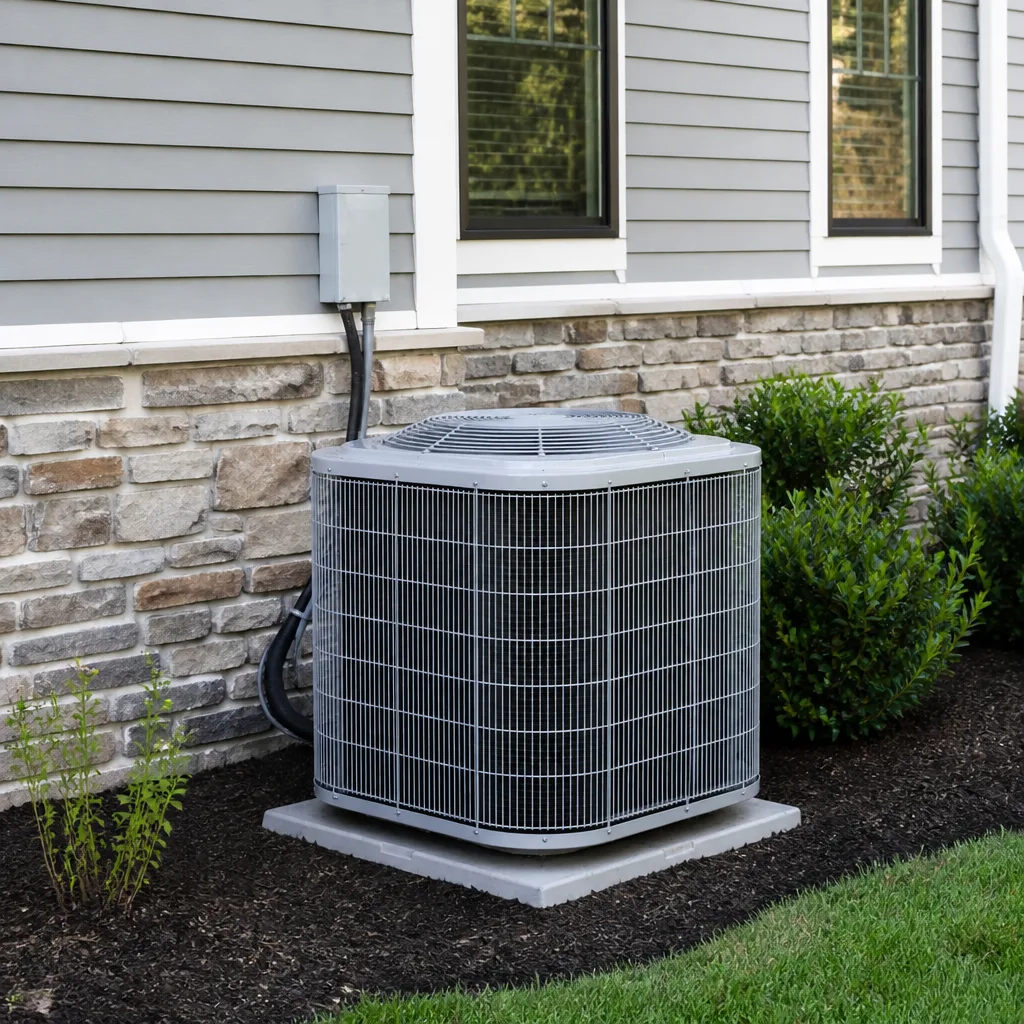 Carrier
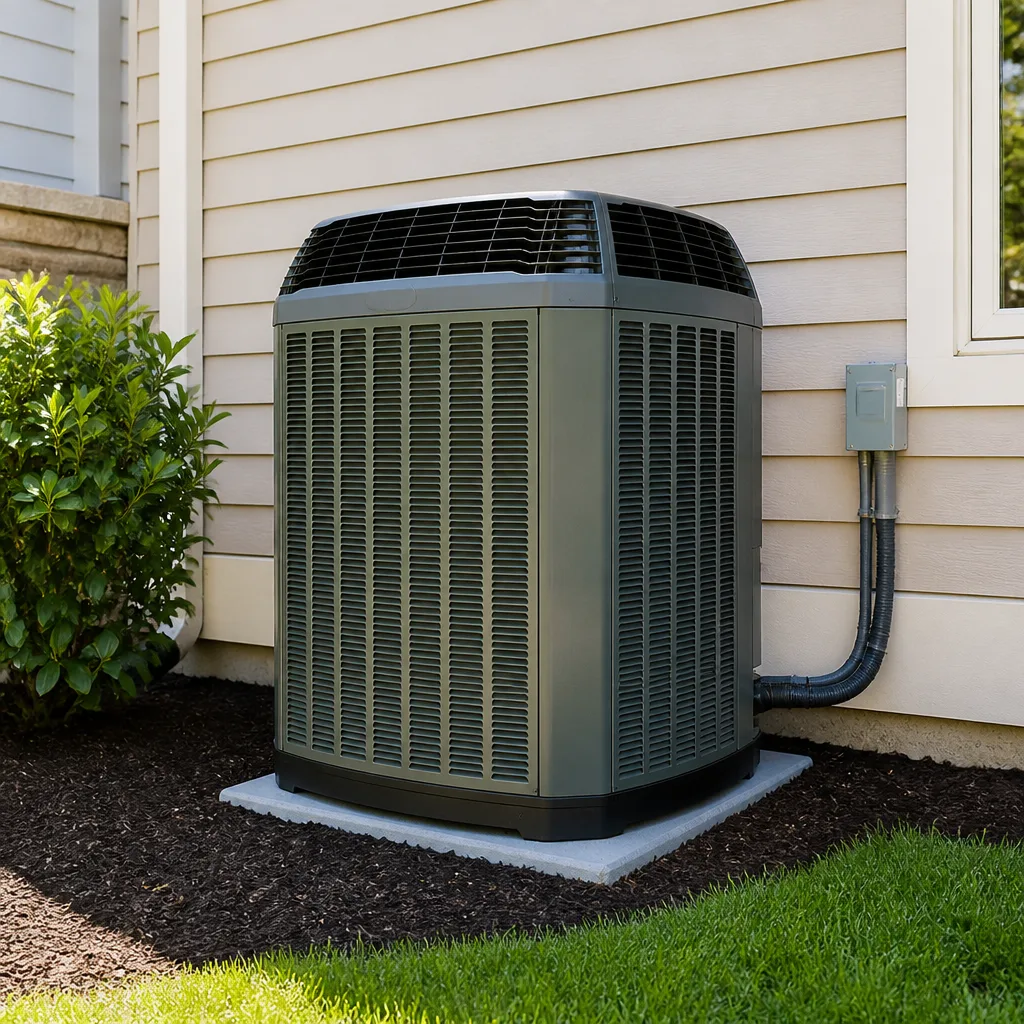 Trane
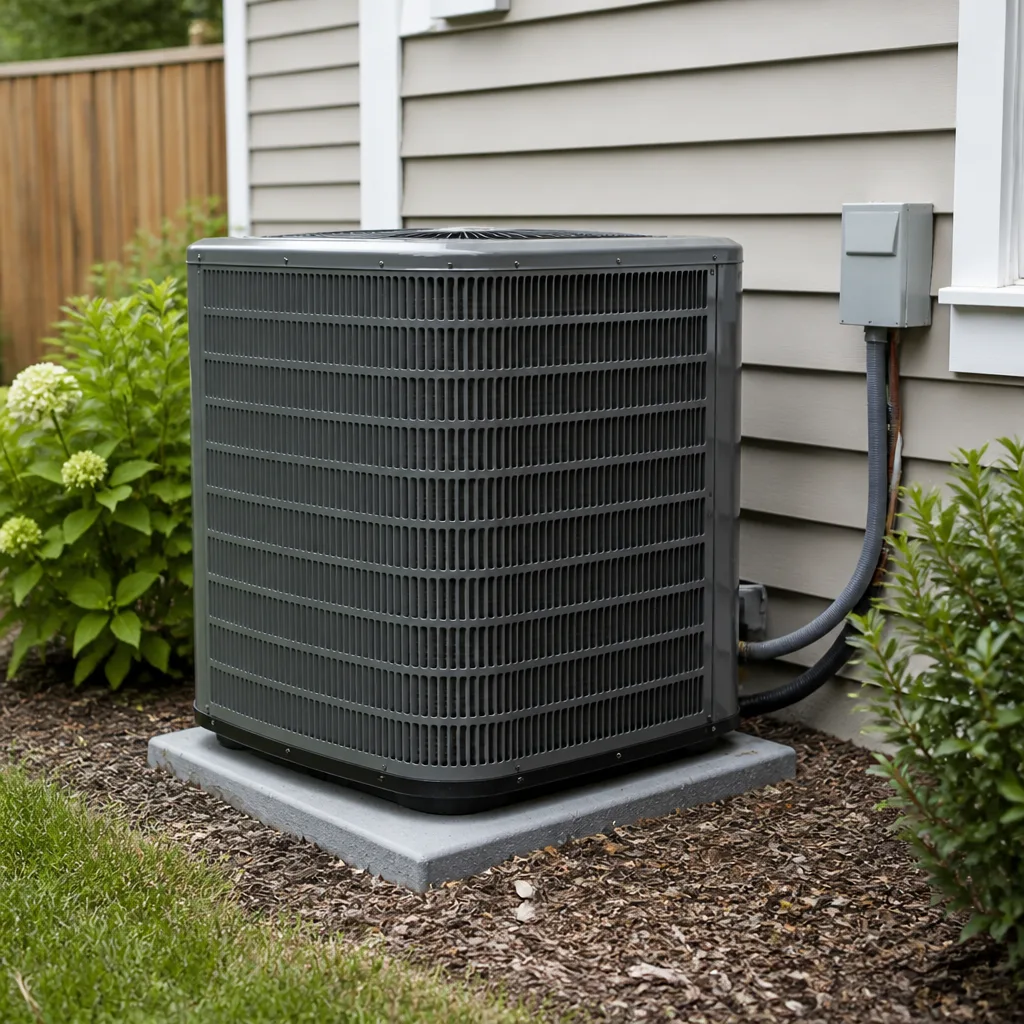 Goodman
Seasonal tune-up and full diagnostic on your Carrier, Trane, or Goodman system - readings shown to you before any repair is proposed
Diagnosis first, numbers second - you approve the repair price before a single part goes in.
Get your free estimateThe Complete AC Repair Guide for Provo Homeowners
Most AC repair advice you’ll find online was written for a house in Houston or Tampa, and it shows. Provo sits at 4,551 feet, our air is dry enough that your evaporator coil behaves nothing like it would in a humid climate, and the dust that moves through Utah Valley each June stresses a condenser in ways a coastal guide never addresses. That mismatch matters, because a technician who reads your system through the wrong climate lens can charge a part that wasn’t the problem. This guide maps the repairs Provo homeowners actually face to the equipment they actually own, so you can tell a real diagnosis from a guess.
Quick Answer
AC repair in Provo usually comes down to one of five failures: a failed capacitor or contactor, a refrigerant leak, a clogged condenser coil, a blower motor issue, or a control board fault. Because of our elevation and dry air, refrigerant charge readings and evaporator behavior here differ from what most national guides describe, so the correct fix starts with a technician who knows how a system should look at 4,551 feet. The cheapest repair is almost always the one made on a correct diagnosis the first time.
Styles & brands we work with
- AC repair
- Furnace & heating
- Heat pumps
- Ductless mini splits
- Carrier
- Trane
- Goodman
Table of Contents
- Why Provo AC Systems Fail Differently
- How Elevation Changes Your Refrigerant Readings
- What Dry Air Does to Your Evaporator Coil
- June Dust and July Heat: What Fails First
- What Utah Lets You Fix Yourself and What It Doesn’t
- Reading Your System’s Age and Brand Honestly
- Why Brand-Specific Diagnosis Saves You Money
- What a Proper First Visit Looks Like
Why Provo AC Systems Fail Differently
Air density drops as you climb, and Provo’s 4,551 feet is enough to change how your system moves heat. A unit that’s factory-charged and sized for a lower-altitude home runs with less mass of air across the condenser and evaporator coils, which can reduce effective cooling capacity and shift the pressures a technician reads on gauges. That doesn’t mean your system is broken by design. It means the baseline is different, and a technician who judges your charge against a sea-level chart may add or remove refrigerant that was never the issue.
Then there’s the swing. Provo summers push triple digits in July, but our nights cool off hard, and the shoulder seasons bounce between heating and cooling within the same week. A system that idles for days and then runs flat-out for six hours stresses its start components more than steady operation does. In our experience, that’s where capacitors and contactors go first.
Homes across Provo feel this in different ways. Older brick houses near downtown, newer builds out toward the east bench, and rentals around the university district each put a different load on their equipment. The repair patterns hold, but the timing varies with how tight the house is and how much shade the condenser gets.
- High-altitude capacity loss: less air mass means the same tonnage cools a little less effectively at 4,551 feet.
- Hard temperature swings: repeated start-stop cycles wear out electrical components faster.
- Dry intake air: the coil runs without the condensate load it expects, which changes how it ices and drains.
- Seasonal dust: spring wind loads the condenser fins before the July heat peaks.
How Elevation Changes Your Refrigerant Readings
Refrigerant pressures are tied to temperature, and at altitude the saturation curves a technician works from don’t match the numbers printed on a generic charging chart. A technician who doesn’t account for elevation can read a system as overcharged or undercharged when it isn’t. The safest approach is to charge by superheat or subcooling measured against the manufacturer’s spec for that model, not by a pressure reading alone.
This matters most when your system has had a leak. If someone tops it off to a standard pressure without confirming the target charge, you’ll end up with a system that cools unevenly, short-cycles, or freezes the line set. The correct process looks like this:
- Confirm the actual leak location with electronic detection or pressure testing, not a visual guess.
- Recover the remaining refrigerant into a recovery cylinder, as EPA rules require.
- Repair the leak, then pressure-test and vacuum the system to confirm it holds.
- Recharge to the manufacturer’s specified weight or to target superheat/subcooling adjusted for your elevation.
- Verify the temperature split across the coil before the technician leaves.
If a company tells you it’s topping off your system without checking the leak, that’s a red flag. Refrigerant doesn’t get used up; if it’s low, it escaped somewhere. On a Carrier, Trane, or Lennox system, the manufacturer’s charge spec for that exact model is what the technician should be working from, and a good one will have it on hand.
What Dry Air Does to Your Evaporator Coil
Utah Valley air is dry, and that changes the job your evaporator coil does. In humid climates, the coil pulls moisture out of the air alongside the heat, which is why those systems generate a steady stream of condensate. Here, there’s far less moisture to remove, so the coil runs drier and the drain line carries less water. That sounds easier, but it creates its own failure patterns.
- Less condensate flushing: drain lines can silt up because there’s not enough water flow to keep them clear, leading to overflow and water damage.
- Faster coil fouling: dry dust sticks to a coil that isn’t being washed by condensate, reducing heat transfer over time.
- Uneven icing: a low charge combined with dry air can cause partial frost that looks different than the all-over icing you’d see in a humid climate.
- Longer run times: because there’s no humidity load, the system runs until it hits the thermostat setpoint, which puts more hours on the blower motor.
Homeowners often mistake a dry-running coil for a refrigerant problem, because the symptom, weak cooling, looks the same. The repair differs. A plugged coil needs a proper cleaning, and a restricted drain needs clearing before it causes damage. Both are straightforward if diagnosed correctly. Neither should require parts.
June Dust and July Heat: What Fails First
Provo’s spring wind moves a lot of dust, and that dust arrives right before the heaviest cooling load of the year. By the time July hits, an already-fouled condenser is working harder than it should. Here’s the component order we typically see fail, from most to least common:
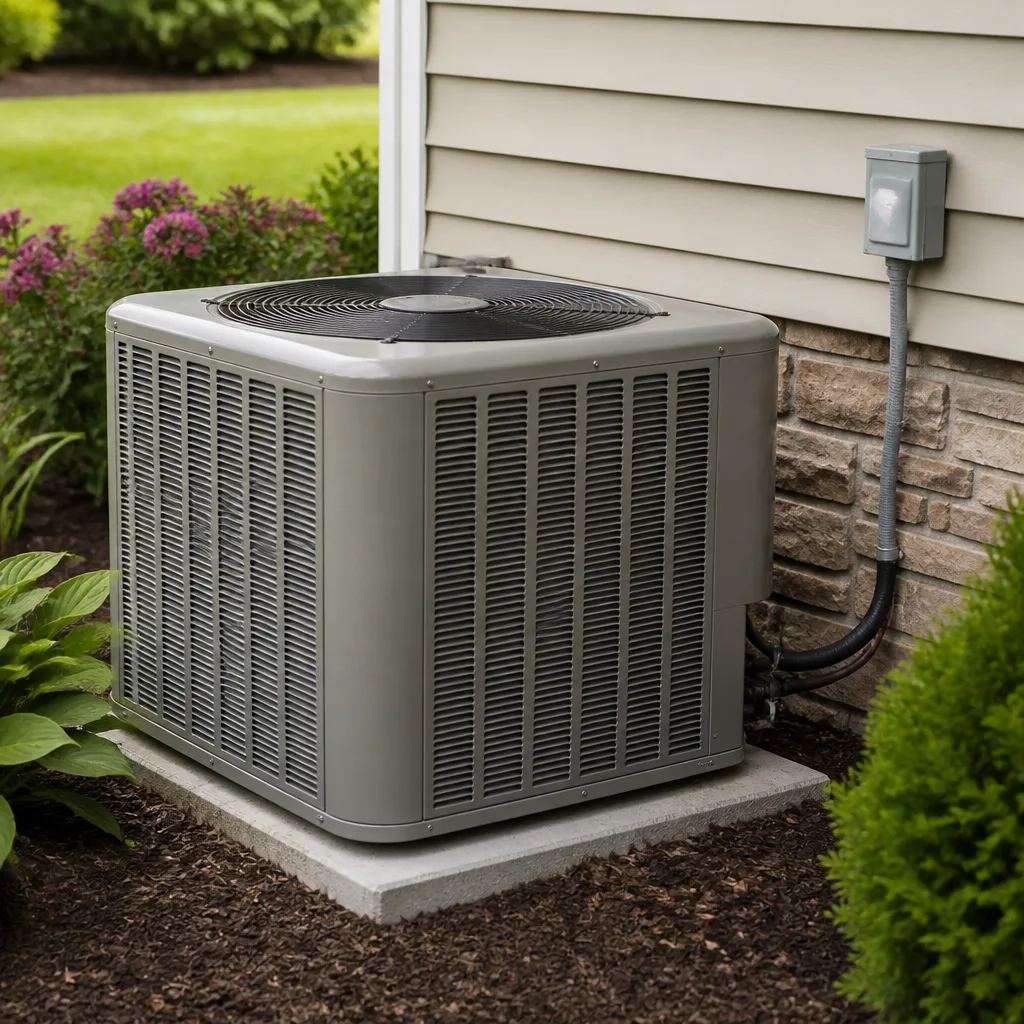
- Capacitors. These start the compressor and condenser fan. Heat and dust both shorten their life, and a failed capacitor is the single most common no-cooling call.
- Contactor. The relay that switches power to the compressor. Pitted contacts cause intermittent cooling that seems to fix itself.
- Condenser coil. A dust-clogged coil can’t shed heat, so the compressor runs hot and trips on overload.
- Blower motor. Bearings wear out faster on a system running long cycles in dry air.
- Refrigerant leaks. Vibration and temperature cycling loosen fittings and stress the coil over years.
- Control board. Usually fails after a surge or a shorted component upstream.
Notice that the cheap parts top the list. In our experience, a huge share of “my AC stopped working” calls are solved with a capacitor, a contactor, or a coil cleaning, not a compressor. If someone quotes you a full system replacement before checking these, ask why. An American Standard or Goodman system with a failed capacitor needs a capacitor, not a new condenser.
What Utah Lets You Fix Yourself and What It Doesn’t
Some AC problems are genuinely homeowner-level, and some are not just difficult but legally restricted. Federal EPA rules under Section 608 require that anyone who handles refrigerant, whether by adding, recovering, or evacuating it, hold a proper certification. You can’t legally buy refrigerant or open a sealed system without it. That’s not a company policy; it’s the law, and it applies to every homeowner in Provo.
Here’s the honest split:
- Safe to do yourself: replacing the air filter, clearing debris from around the condenser, gently rinsing the outdoor coil from the inside out with a garden hose, checking that the thermostat batteries are good and the mode is set right, and confirming the breaker isn’t tripped.
- Needs a licensed technician: any refrigerant work, opening the sealed system, replacing a compressor or coil, diagnosing a control board fault, and any electrical repair inside the air handler.
- Genuinely dangerous: opening the electrical panel or working on the high-voltage disconnect. Capacitors hold a charge even after the power is off, and the shock can be lethal. Leave it to a trained technician.
If your problem is on the “needs a technician” list, that’s when it’s worth calling. We work on the major brands already installed in Provo homes, and we’ll tell you if a simple filter change would have fixed it.
Reading Your System’s Age and Brand Honestly
The repair-versus-replace question is where homeowners get the most pressure and the least straight talk. The honest answer depends on three things: the age of the equipment, the cost of the repair against the cost of a new system, and how well your home’s ductwork and load match the equipment you have.
Start with the data plate on the outdoor unit. It gives you the model number, serial number, manufacture date, and tonnage. A serial number starting with a different digit pattern tells you the manufacturing year, and most manufacturers publish a lookup. If your system is past roughly 12 to 15 years, repairs start to compete with replacement costs. Before that, a repair usually wins.
Brand matters less than condition. A well-maintained Carrier or Lennox system at 10 years old is often a better repair candidate than a neglected system at 8. Our approach is to fix what you have first, then talk about replacement only when the numbers justify it. When it does come time to replace, that’s a planned, load-calculated job, not a same-day swap. A proper AC installation involves a load calculation, equipment selection, and a scheduled install date with a written fixed price.
Provo’s utility rates also factor in. A system that runs inefficiently because of a failing component costs you every month it stays that way. Sometimes the repair pays for itself in efficiency; sometimes it doesn’t. A technician should be able to show you the math, not just tell you what to buy.
Why Brand-Specific Diagnosis Saves You Money
Every manufacturer designs its equipment a little differently. Carrier uses different control logic than Trane. A Lennox condenser’s charge spec doesn’t match a Goodman’s. When a technician is fluent in the specific brand in your home, diagnosis is faster and the part you get is the right one. When they’re not, you pay for diagnostic time while someone looks up specs on their phone.
Our team works across the brands most common in Provo homes, including American Standard, Carrier, Trane, and Lennox. That means you don’t get pushed toward one manufacturer, and you don’t pay for a technician to learn your system on your dime. The repair-first approach follows from that: if your equipment has life left, we fix it.
This is also why we keep our service menu focused. We handle AC repair, AC installation, and furnace repair. That’s it. When a company stretches across plumbing, electrical, and dozens of other trades, the depth on any one of them suffers. A technician who spends every day on cooling and heating work knows what a failing capacitor sounds like before the gauges even come out.
Year-round, that focus pays off. The same team that diagnoses a July cooling failure can handle your furnace when winter arrives. That continuity matters in a place where the temperature swings as hard as it does here. If you want a broader look at what we cover in the valley, see our Provo page.
What a Proper First Visit Looks Like
A good repair visit follows a predictable sequence, and knowing it helps you judge whether you’re getting real diagnosis or a sales call. When we send a technician, here’s what should happen:
- Interview. The technician asks what you noticed, when it started, and whether anything changed (new thermostat, recent power outage, filter change).
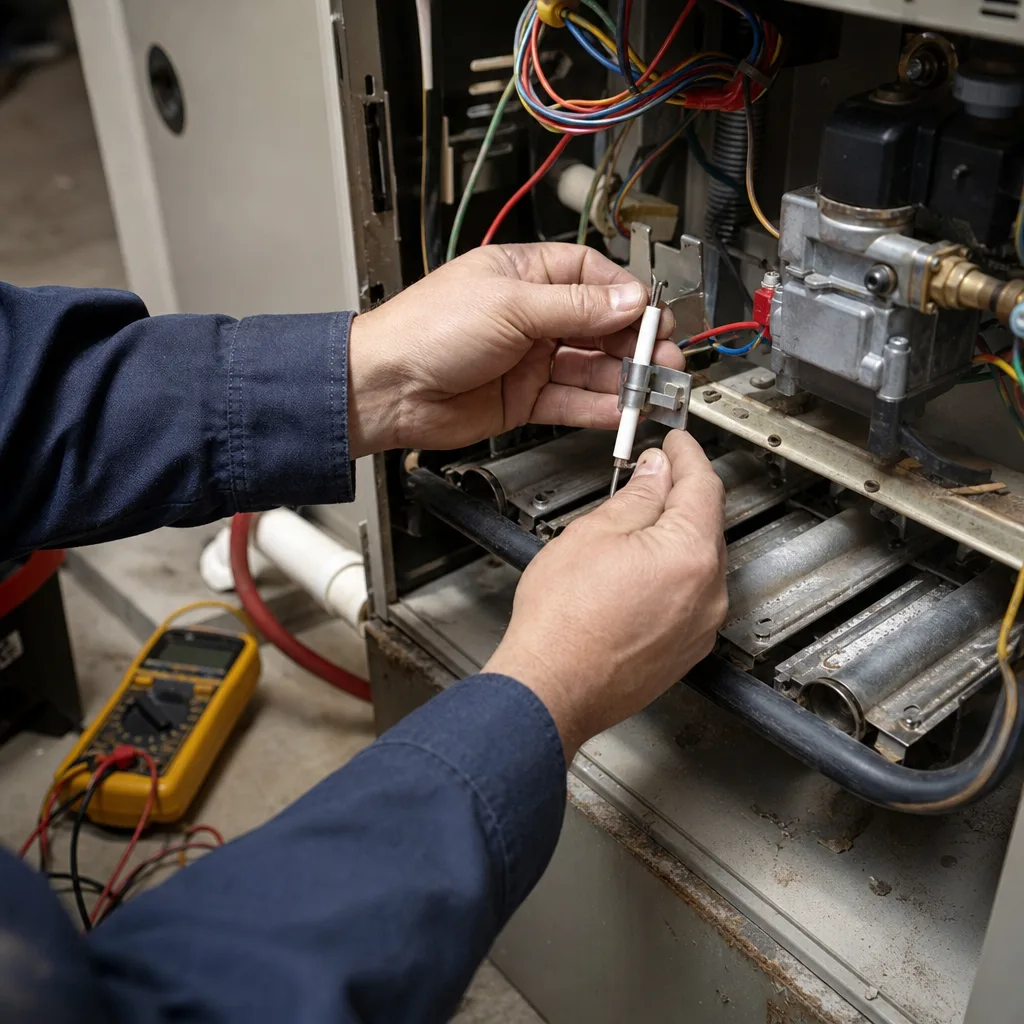
- Visual and electrical check. Capacitor testing, contactor inspection, and a look at the disconnect and wiring.
- Airflow check. Filter condition, blower operation, and static pressure if the system seems restricted.
- Refrigerant check. Pressure readings interpreted against your elevation and the manufacturer’s spec, plus a temperature split.
- Coil inspection. Condenser and evaporator condition, drain line flow, and any signs of ice or oil residue that point to a leak.
- Written findings. You get a plain explanation of what failed, what it costs to fix, and what’s optional versus necessary.
If a technician skips the electrical checks and goes straight to a replacement quote, that’s not a diagnosis. You can reach us for AC repair with a free estimate, and we’ll tell you what’s actually wrong. Call (855) 657-5471. We answer 24/7. Fast dispatch from 7am to 7pm, Sunday through Friday.
Common Mistakes to Avoid
- Topping off refrigerant without finding the leak. A system that’s low on refrigerant has a leak, and adding more without a repair just delays the same failure. Every pound you add escapes again, and you pay twice.
- Replacing the whole system to fix a cheap part. A failed capacitor or contactor is one of the least expensive repairs in HVAC. If you’re quoted a full replacement before those are checked, get a second opinion.
- Ignoring the June dust until July. The spring wind loads your condenser coil right before the heaviest cooling load. A gentle rinse in early summer prevents the overheating calls that follow.
- Charging by pressure alone at altitude. A technician who reads your charge against a sea-level chart can misdiagnose a healthy system as overcharged. Ask whether they’re using superheat or subcooling against the manufacturer’s spec for that model.
- Letting the condensate drain silt up. Dry Provo air means less water flushes the line. A clear line is one of the cheapest things to maintain and one of the most expensive to neglect.
- Assuming a brand name means a compatible part. Carrier, Trane, Lennox, and American Standard systems each have model-specific parts. A generic replacement can work briefly and fail early.
- Covering the condenser for the winter and forgetting to uncover it. Running a system with the outdoor unit covered traps heat and can damage the compressor on the first warm day.
See the difference
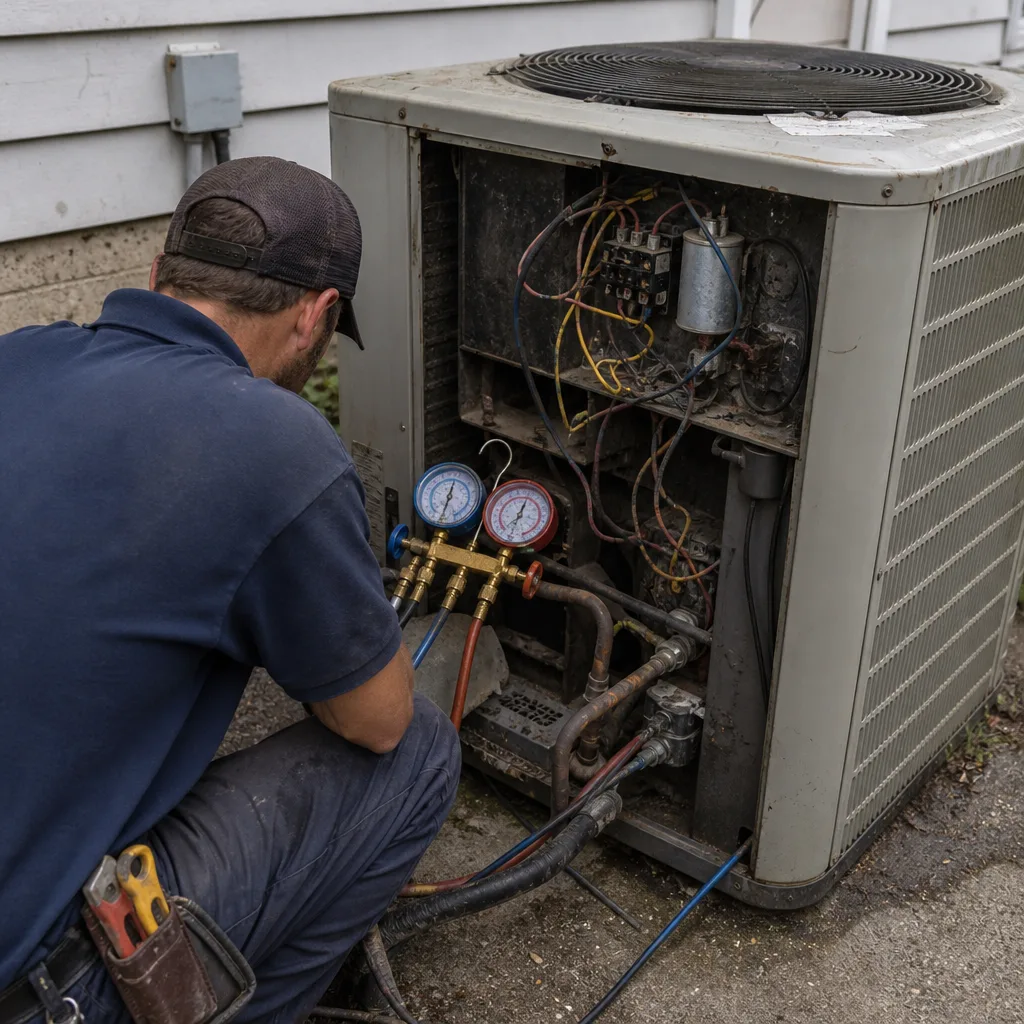 Before
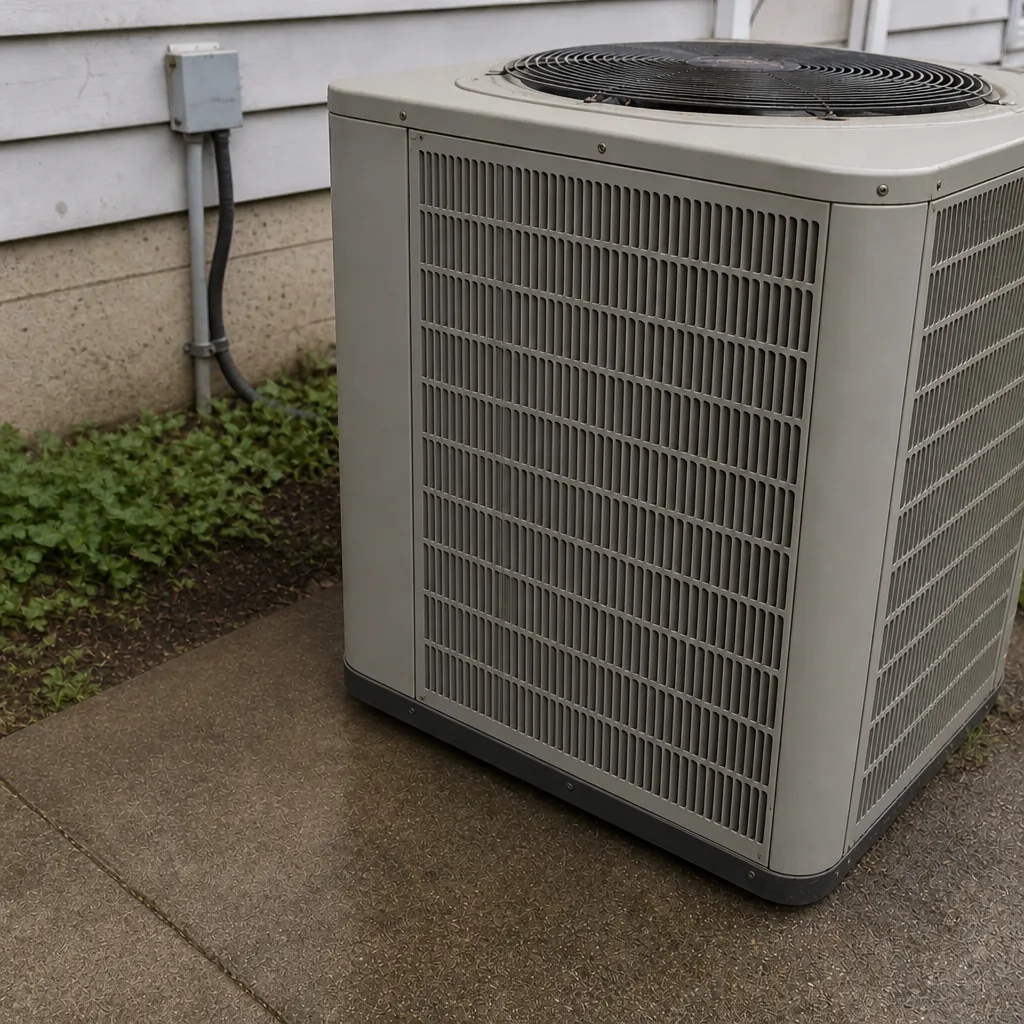 After
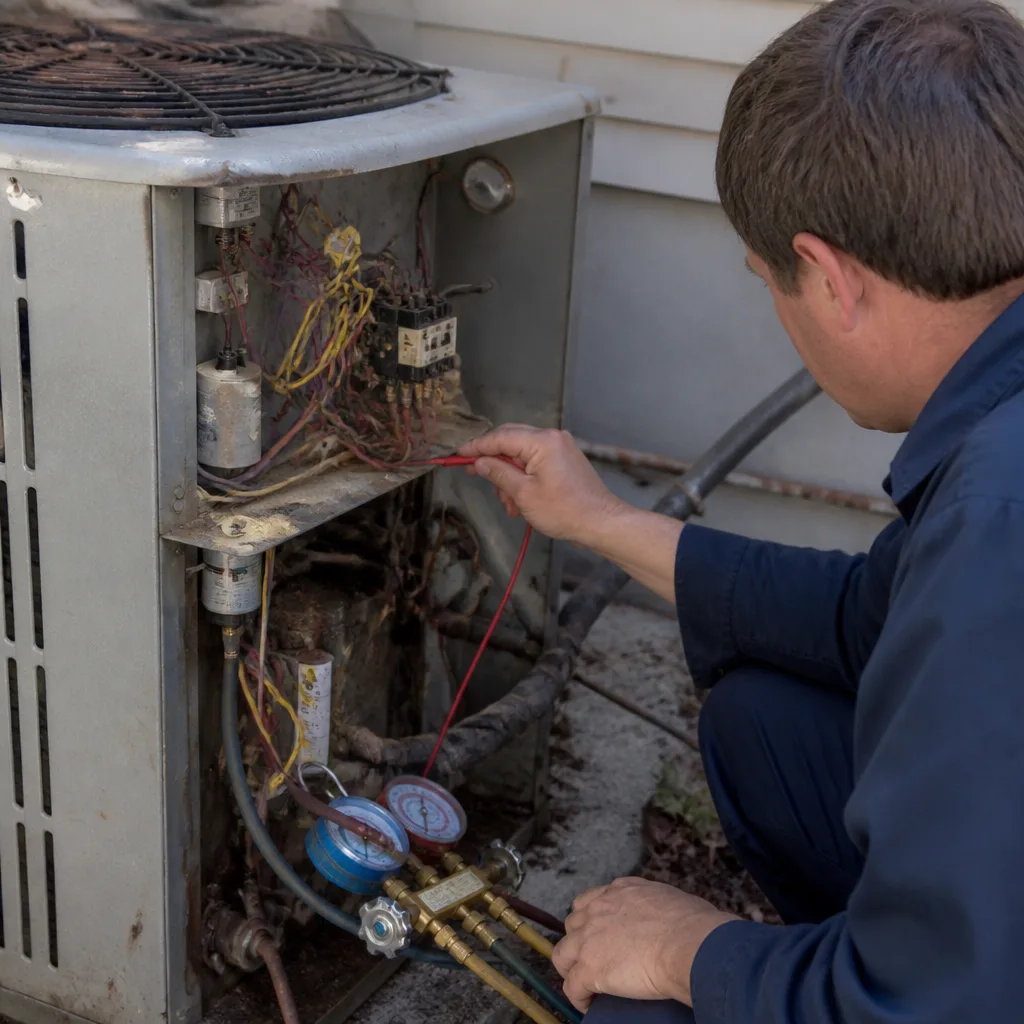 Before
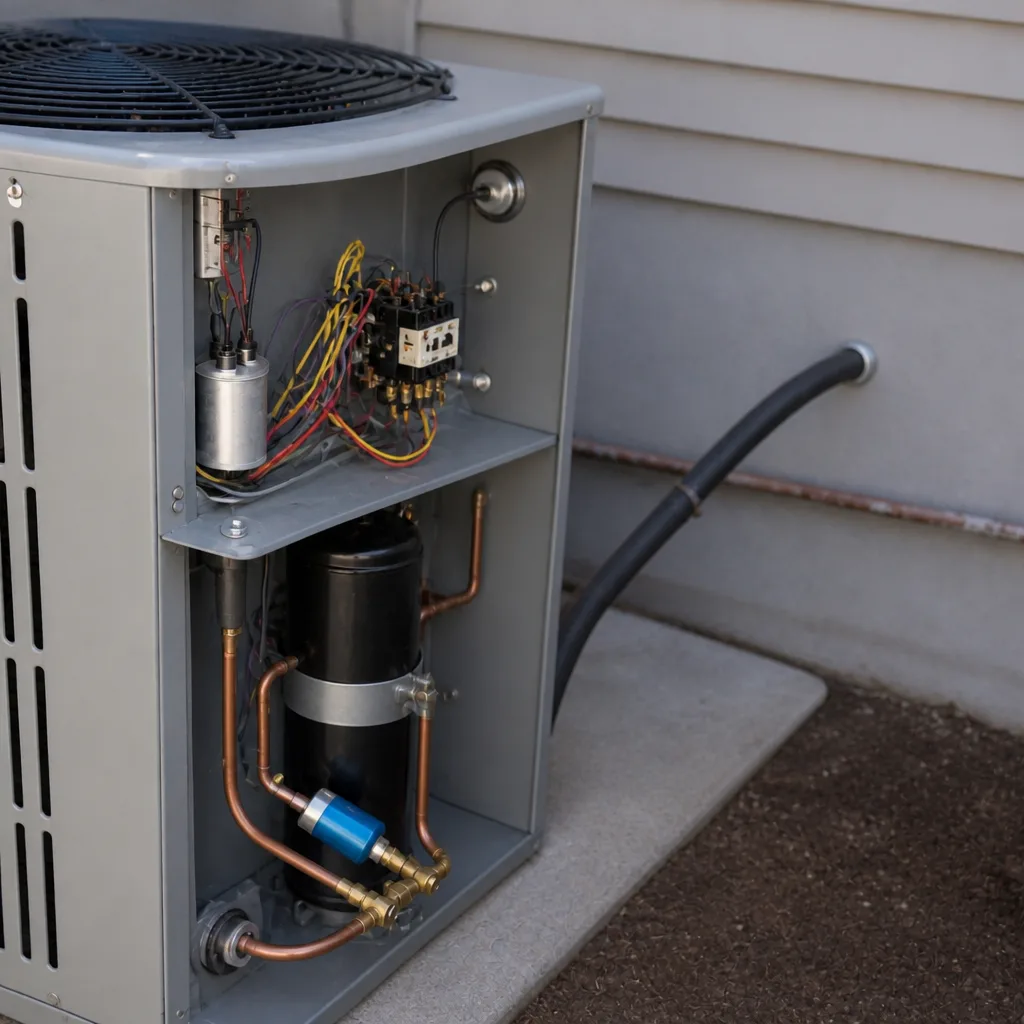 After
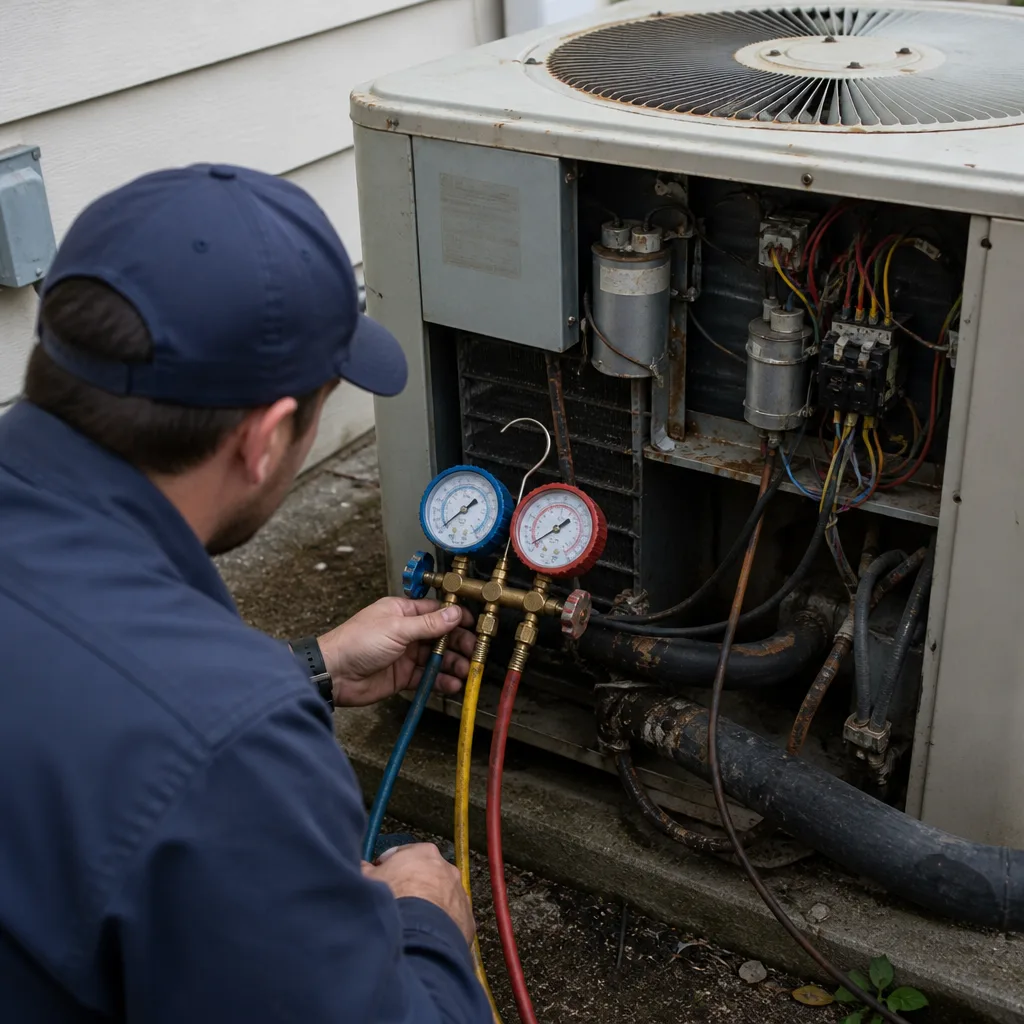 Before
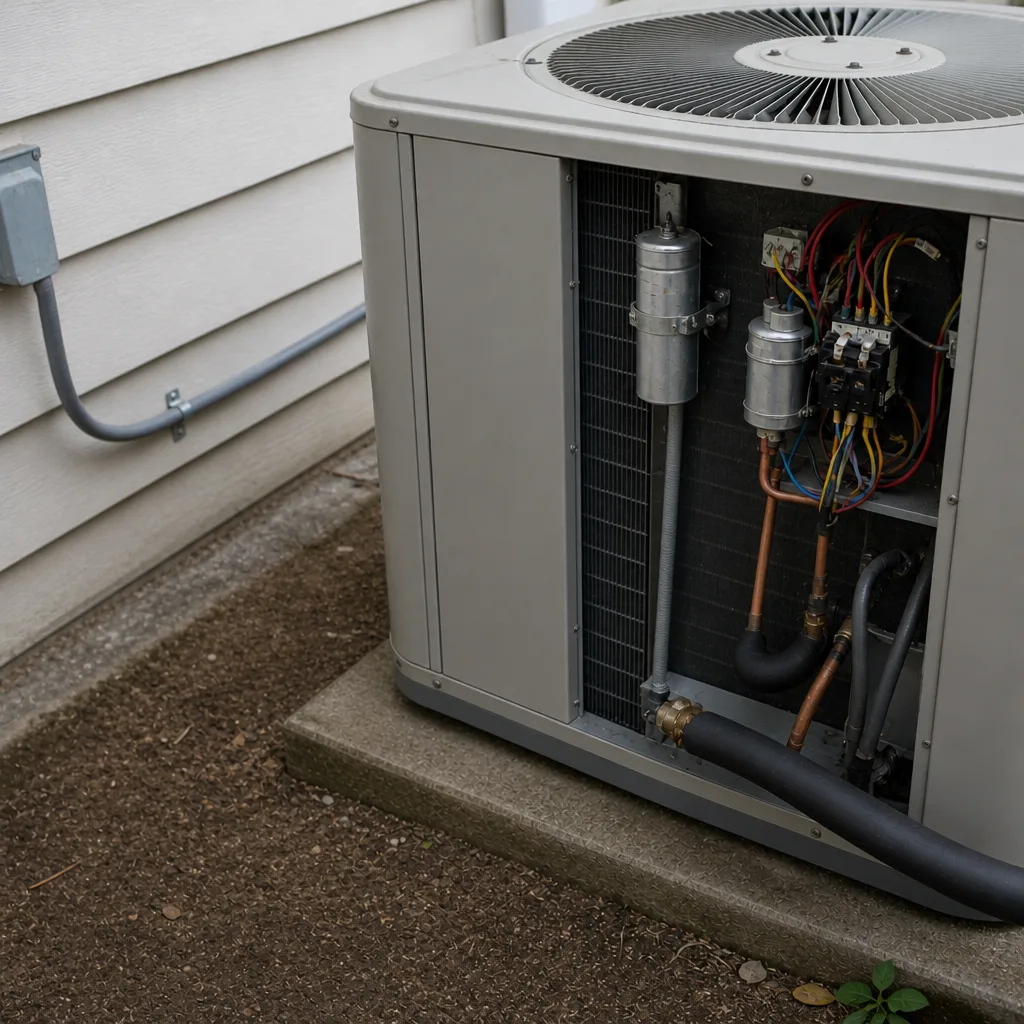 After
When to Call a Professional
Some problems announce themselves clearly. If your system blows warm air, trips the breaker repeatedly, ices over the indoor coil, makes a grinding or screeching sound, or leaks water around the air handler, those are calls worth making now rather than after the house heats up. The same goes for any smell of refrigerant or burning insulation, which point to a sealed-system or electrical problem that shouldn’t wait. If your system is low on refrigerant, that’s a technician-only job under federal rules, and it needs a real leak repair rather than a top-off.
If you’re not sure whether you have a problem at all, that’s fine too. AC Repair Provo offers free estimates in Provo, and a technician can tell you whether you’re looking at a repair or nothing at all. Call (855) 657-5471. We answer 24/7. Fast dispatch from 7am to 7pm, Sunday through Friday. A call outside dispatch hours is booked into the next opening, Sunday through Friday, 7am to 7pm.
Frequently Asked Questions
Most AC repairs in Provo fall in a wide range depending on the part and the system, and the exact price is set per job by a written estimate. A capacitor or contactor replacement sits at the low end, while a compressor or coil replacement sits at the high end. We give a free estimate before any work begins, so you know the number before you decide. Call (855) 657-5471 for an exact quote.
Same-day service is often available for AC repair in Provo, and dispatch runs from 7am to 7pm, Sunday through Friday. If you call during those hours, we’ll tell you the soonest opening. Call (855) 657-5471. We answer 24/7, and a call outside dispatch hours is booked into the next opening.
Yes. At 4,551 feet, the air is less dense, which reduces how much heat your system can move and shifts the refrigerant pressures a technician reads. A system that’s charged to a sea-level spec can run poorly here. The fix is to charge to the manufacturer’s specification for that model, adjusted for elevation, using superheat or subcooling rather than pressure alone.
Repair usually wins if your system is under about 12 to 15 years old and the repair costs a fraction of a new system. Replacement makes more sense when the equipment is past that range, has a failed compressor, or has had repeated refrigerant leaks. The honest answer depends on the actual part and the age on the data plate, so get a diagnosis before you decide. Call (855) 657-5471 for a free estimate.
No. Federal EPA Section 608 rules require certification for anyone who handles refrigerant, including adding, recovering, or evacuating it. That applies to homeowners as well as technicians. You can change your filter, rinse the outdoor coil, and check the thermostat, but refrigerant work needs a certified technician.
Icing in dry air is usually a sign of low refrigerant or restricted airflow, not humidity. A low charge drops the coil temperature below freezing, and restricted airflow from a dirty filter or failing blower does the same. Both need a technician to diagnose, because the symptom looks identical but the repair differs. Call (855) 657-5471 to get it checked.
The Bottom Line
Provo’s elevation, dry air, and hard temperature swings create repair patterns that generic AC guides don’t cover. Your refrigerant charge needs to be set at altitude, your evaporator coil runs drier than a humid-climate coil, and the June dust that loads your condenser arrives right before the July heat that tests it. Most failures here are cheap electrical parts, not compressors, and the difference between a real fix and a repeat service call is a correct diagnosis on the first visit. Whether you need AC Repair Provo service or a planned installation, the same team handles both.
If your system is acting up, call (855) 657-5471 for a free estimate. We answer 24/7. Fast dispatch from 7am to 7pm, Sunday through Friday.
Written by the team at AC Repair Provo, serving Provo since 2013.